前ページ 次へ

What Are the Benefits of an Electric Tube Bender?

業界のノウハウ 2025/12/22

As manufacturing shifts toward Intelligent Production (Industry 4.0), integrating automated equipment and sustainable energy saving technologies has become a strategic priority for modern enterprises. All Electric Tube Benders, in particular, are gaining significant global traction due to their exceptional precision, consistent efficiency, and digital control.

These advanced tube benders are now indispensable across critical sectors, including aerospace, automotive, medical device manufacturing, and high-end structural engineering. For those planning to modernize production facilities, this article offers a comprehensive overview of electric tube bending technology, its distinctive categories, and essential procurement criteria. We aim to guide you through strategic equipment selection and line deployment to significantly sharpen your competitive edge in the global market.
 

Understanding Electric Tube Bending Technology

An electric tube bender is a sophisticated system driven by multi-axis servo motors that precisely synchronize the force, speed, and positioning of every movement. This high-level control results in superior repeatability and tighter tolerances compared to traditional methods. Unlike hydraulic systems, which rely on fluid pressure buildup to generate torque, a process prone to delays. The electric benders deliver near instantaneous dynamic response and more intuitive parameter calibration.

Furthermore, electric systems offer exceptional thermal stability; they are virtually unaffected by changes in ambient temperature or humidity, which typically cause performance fluctuations in oil-based systems. This makes them the definitive choice for high-precision manufacturing in the aerospace, automotive, and medical sectors. As industry standards evolve, more facilities are decommissioning legacy hydraulic units in favor of all-electric technology to maximize throughput and operational consistency.
〈Extended Reading:What Is a Pipe Bending Machine? How to Choose the Right One for Your Needs!
 

All-Electric vs. Hybrid Bending: Understanding the Differences

Modern electric tube benders are primarily categorized into two distinct types: All-Electric Benders and Hybrid Electric-Hydraulic Benders. While both represent a leap forward in technology, they differ significantly in their control architectures, precision capabilities, and ideal application scenarios. When choosing the right system, manufacturers must evaluate their specific production needs, balancing factors such as workpiece complexity, tolerance requirements, and long-term ROI (Return on Investment). Below, we break down the unique characteristics and best-use cases for each technology.
 

All-Electric Tube Benders

All electric benders use every single servo motor to control every single axis. Because the force and speed can be set with extreme precision, the finished products are highly consistent with minimal error.

  • Key Features: Fully digital control systems, rapid response times, and intuitive adjustments.
  • Best For: High-precision fields like aerospace, medical instruments, and precision automotive/motorcycle tubing.
  • Advantage: Maintains the same high quality even during prolonged production runs, making it a staple for high-end manufacturing.
 

Hybrid Electric Tube Benders

Hybrid tube benders combine servo control with hydraulic bending technology. This hybrid design provides the massive force required for bending while maintaining a high degree of processing precision.

  • Key Features: Higher bending torque, lower acquisition cost compared to all electric benders, and lower maintenance complexity.
  • Best For: Thick-walled pipes, hard materials, fitness equipment, automotive exhaust systems, structural architectural pipes, shipbuilding, and heavy-duty frames for forklifts or agricultural machinery.
  • Advantage: A practical and cost-effective choice for companies that need to process tougher, larger-diameter materials.
 

Electric vs. Hydraulic Tube Benders: Which System is Right for Your Facility?

In the landscape of modern manufacturing, selecting between an all-electric and a traditional hydraulic tube bender is a pivotal decision for production efficiency. These two technologies differ fundamentally in their drive mechanisms, repeatable precision, energy profiles, and long-term maintenance needs. While hydraulic systems have long been the industry workhorse, electric benders offer the digital control necessary for today's high tolerance requirements. The following comparison table highlights the core distinctions to help you determine which system delivers the best ROI for your specific production environment.


Electric Tube Bender vs. Hydraulic Tube Bender Comparison Table

Comparison Item Electric Tube Bender Hydraulic Tube Bender
Drive System Driven by electric servo motors; each axis is servo-controlled for stable and controllable movement. Uses hydraulic cylinders and hydraulic proportional valves to provide bending force.
Precision Higher bending precision (up to ±0.05°) with high repeatability; unaffected by temperature or humidity. General precision (typically ±0.1°); oil fluidity is affected by temperature and humidity, which may cause deviations.
Startup Method Short startup time and fast response, similar to the acceleration concept of an electric vehicle. Requires building up hydraulic pressure; slower startup.
Energy Consumption Servo-controlled; all-electric benders operate without hydraulic oil, saving approximately 300L of oil annually. Higher energy consumption; the hydraulic system must run for long periods to maintain pressure.
Environmental Impact Low noise, no risk of oil leaks, and a clean working environment. Risk of oil contamination, higher noise levels, and requires regular oil disposal/handling.
Maintenance Requirements Simpler maintenance with no oil replacement; maintenance tasks are straightforward. Requires regular oil changes; maintenance is more complex.
Application Scenarios Aerospace, medical, automotive/motorcycle parts, high-precision processing, etc. Thick-walled pipes requiring high force, large structural components, etc.

(The table can be scrolled horizontally on mobile devices.)


6 Major Advantages of Electric Tube Benders

If you are evaluating how to improve factory management efficiency, electric tube benders offer six core advantages that directly impact production costs, product yield, changeover speed, personnel training, and equipment maintenance. The following details explain these benefits to help businesses assess whether electric bending equipment is the right fit for their operations.
〈Extended Reading:5 Core Advantages of CNC Tube Benders, Your Complete Guide for Smart Equipment Selection!
 

Electric Tube Benders Advantage 1: Ease of Operation

Using SOCO’s electric tube benders as an example, these machines feature the i2 intelligent interface and a 3D graphical operating system. The display is clear and the operation is highly intuitive, allowing beginners to become proficient in about 60 minutes. By significantly shortening training time, companies reduce labor costs and allow operators to become productive faster. Simplified workflows also minimize the risk of human error, simultaneously boosting production line efficiency and product consistency.
 

Electric Tube Benders Advantage 2: Intelligent Production Simulation and Interference Detection

Equipped with advanced 3D simulation software, all-electric tube benders allow operators to virtualize the entire bending cycle based on input parameters before the physical process begins. This proactive approach identifies potential tooling collisions or machine interference points in a digital environment. By detecting these issues early, manufacturers can prevent costly mold damage, minimize material scrap, and avoid catastrophic equipment breakdowns. It effectively eliminates the traditional "trial and error" phase, which is particularly critical during production line changeovers or the development of new product specifications. This capability ensures a faster, safer, and more streamlined setup, drastically reducing time-to-market for new designs.
 

Electric Tube Benders Advantage 3: Clean, Quiet, and Sustainable Operations

Unlike hydraulic benders that require oil pressure to generate thrust, all-electric machines eliminate the risk of oil leaks and operate with significantly lower noise levels. This creates a cleaner and quieter work environment, which improves employee safety and workplace quality. For production lines that must adhere to strict cleanliness or noise regulations, switching to electric equipment reduces the burden of oil waste disposal and noise control.
 

Electric Tube Benders Advantage 4: High Precision

The processing precision of an all-electric tube benders can reach ±0.05°. Unlike hydraulic tube bender, which is susceptible to angle deviations caused by changes in temperature or humidity, electric models remain stable. For production lines with strict tolerance requirements, this high precision effectively reduces defect and rework rates, lowering material and labor costs while ensuring smoother downstream assembly.
 

Electric Tube Benders Advantage 5: Fast Startup Speed

The motors in an electric tube bender respond instantly, requiring no preheating and no waiting for hydraulic pressure to build up—much like how an electric vehicle accelerates faster than a combustion engine. For production lines that frequently switch between different workpiece specifications, the rapid startup saves significant waiting time, thereby increasing overall throughput and equipment utilization.
 

Electric Tube Benders Advantage 6: Energy-Saving and Eco-Friendly

Because all-electric benders lack a hydraulic system, there is no need for a pump to run continuously, leading to a marked reduction in power consumption and oil usage. Data shows that each all-electric bender can save approximately 300L of oil per year. Over the long term, this saves substantial operating costs and aligns with global manufacturing trends toward energy efficiency and carbon reduction, helping businesses practice sustainability and reduce waste.


Where to Source High-Performance Electric Tube Benders: Partner with SOCO

For enterprises seeking to elevate their manufacturing capabilities, SOCO’s all electric tube benders deliver industry leading performance metrics: a 50% increase in processing speed, precision levels within ±0.05°, and energy savings exceeding 50%. Our systems also feature advanced 3D collision simulation to preemptively eliminate interference risks and are engineered for seamless integration into fully automated "smart" production lines.

A standout solution is the SOCO Left and Right Tube Bending Machine (U Series). This innovative technology allows for simultaneous bi-directional bending, completing complex multi-bend workpieces in a single cycle. By eliminating the need for machine transfers or repetitive re-clamping, the SOCO U Series Bender drastically maximizes throughput while minimizing operational costs. Explore our product pages to view detailed specifications and real-world application case studies.
〈Recommended Model:All Electric + Left and Right Tube Bender (U series)
 

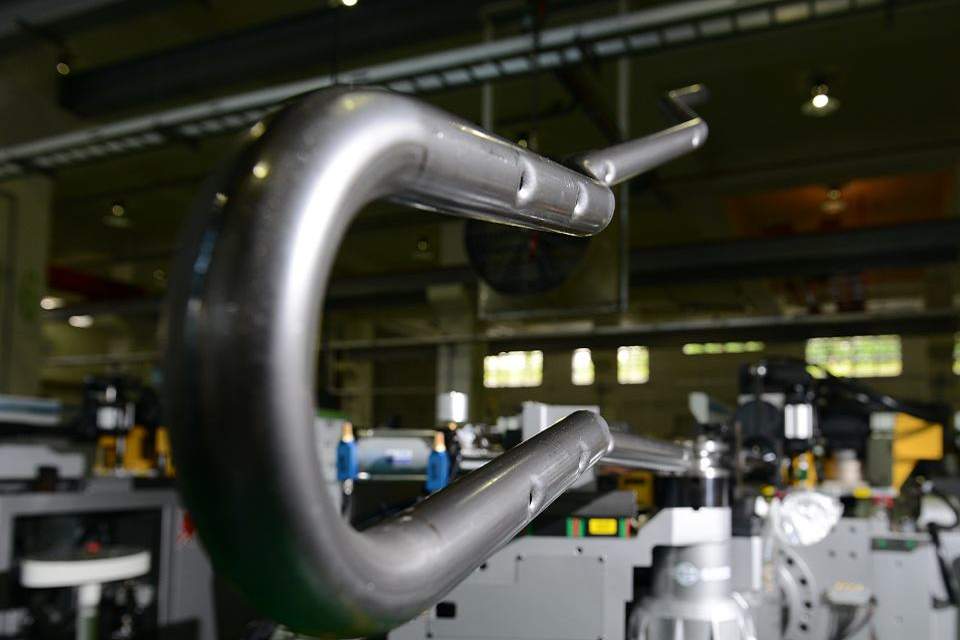
SOCO All-Electric Tube Bender Case: Automotive Headrest Frames

In the manufacturing of automotive headrest frames, the production line utilizes the SOCO SB-25x8A-MR-V-U all-electric model. This bender features a zero-hydraulic design, 8 axis all electric control, and bidirectional (Left & Right) bending capabilities.

Equipped with DGT (Direct Gear Transmission) patented technology, it achieves maximum bending space with minimal interference conditions. This allows for multi-stack bending within a single process, eliminating the need for machine changes or workpiece re-clamping. It is the ideal solution for the complex, high precision production requirements typical of the automotive and motorcycle parts industries.
〈Operation Video: Left + Right Tube Bender Cell (SB-25x8A-MR-V-U) with OD 25 mm Capacity
 

Conclusion

As the global manufacturing industry shifts toward automation and precision machining, electric tube benders have demonstrated clear advantages in accuracy, production efficiency, energy conservation, and workplace environment improvement. For enterprises that prioritize processing quality and long-term cost control, adopting electric bending equipment is a critical step in enhancing production line competitiveness. SOCO possesses over 40 years of technical experience and maintains a global network of service distributors across North America, Europe, and Asia. As Asia’s No. 1 and one of the world’s Top 2 tube bender manufacturers, we provide comprehensive technical support. Whether your business is looking to upgrade production lines, replace old equipment, or introduce new manufacturing processes, please contact us. Let SOCO assist you with equipment selection and deployment planning to optimize your overall production performance.