5 Core Advantages of CNC Tube Benders, Your Complete Guide for Smart Bender Selection!
As the manufacturing industry moves toward automation and digitalization, CNC tube benders have become essential equipment in modern factories. By controlling machine operations through computer systems, CNC tube benders offer energy-saving and high-efficiency advantages, enabling smarter production with improved quality and performance. As a result, they are widely used in global markets, especially in high precision industries such as automotive, aerospace, and medical device manufacturing.
If you want to learn more about the advantages, types, applications, and selection criteria of CNC tube benders, this article provides a comprehensive overview to help you understand the equipment quickly.
Five Major Advantages of CNC Tube Benders – Enhancing Manufacturing Efficiency Across the Board!
More companies are adopting CNC tube bending machines because automated systems align with the global trend toward smart manufacturing and precision machining. With intelligent software and automated tooling management, CNC tube benders can significantly shorten product development and production preparation time, helping companies respond quickly to market changes. Below are five key advantages of CNC tube benders to help you understand the real-world benefits across various industries.
〈Extended Reading:What Are the Types of Tube Bending Machines? Tube Bender's Applications vs Materials? Top Tube Bender Manufacturers Worldwide ?〉
High Precision of CNC Tube Benders
A CNC tube bender controls every motion, including bending angles, rotation direction, and feeding length—through a computerized system. Precise numerical control reduces angle deviation to ±0.05° to ±0.1°, and advanced All Electric Tube Benders can achieve accuracy within ±0.05°.
This significantly improves product consistency, making CNC tube benders ideal for industries requiring tight dimensional tolerances, such as automotive and aerospace. Additionally, higher production accuracy increases yield rates and reduces material waste, allowing companies to maintain product quality while improving output.
Multi-Axis Synchronization and Multi-Angle Bending
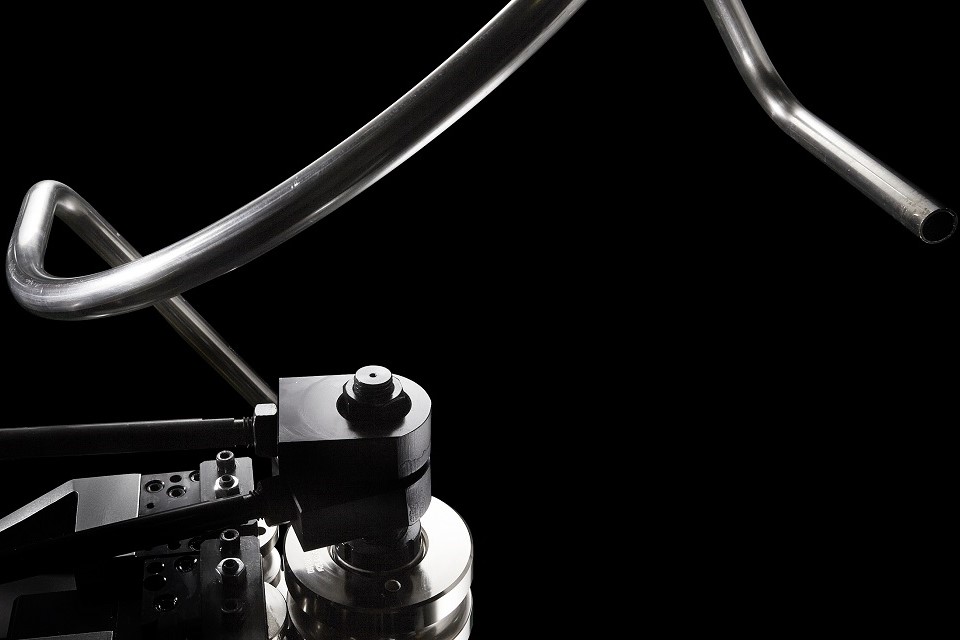
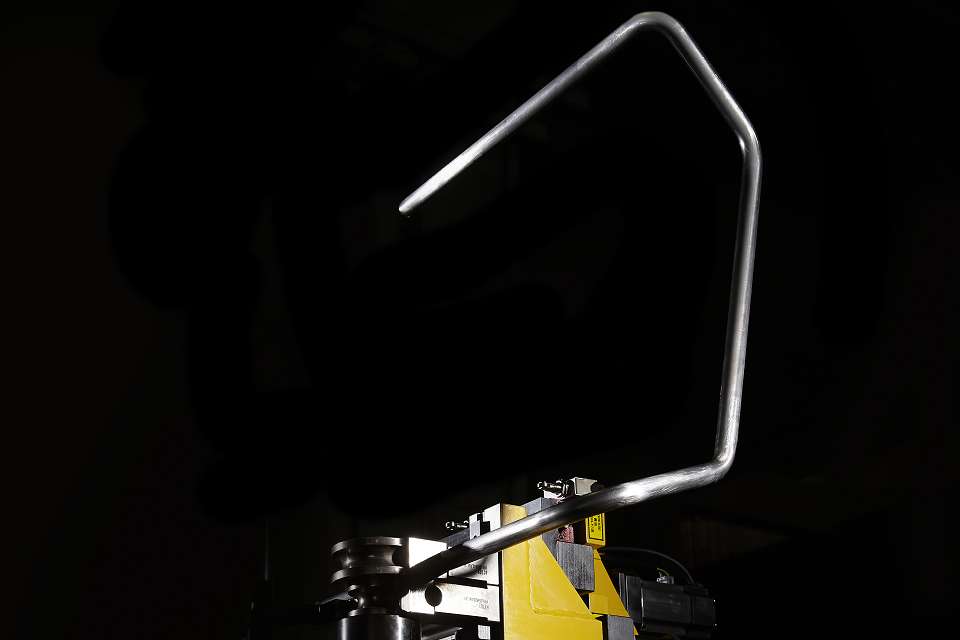
One major advantage of CNC tube benders is their ability to control multiple axes simultaneously, allowing different angles and directions to be bent in a single process. Unlike traditional machines that require frequent mold changes or manual adjustments, CNC tube benders allow operators to input YBC data directly into the control system, completing multi-angle bending automatically.
High-Efficiency Automated Production
CNC tube benders can integrate with loading, bending, and unloading systems, as well as robotic arms, enabling full automation of the production process. This reduces cycle time, labor costs, and error rates. Moreover, the energy saving benefits of automated production support companies in moving toward smart manufacturing and net-zero emissions.
Suitable for Multiple Materials and Specifications
In addition to multi-angle bending, CNC tube benders can process various materials, including aluminum alloys, stainless steel, mild steel, and copper. Its clamping and control systems can adapt to different diameters and wall thicknesses without requiring additional machines. This allows companies with diverse product lines to save on equipment investment.
〈Extended Reading:Metal Tube and Bar Cutting Technologies: Evolution? Types? and Future Outlook?〉
Wide Applications Across Industries
Thanks to precision machining and stable production, CNC tube benders are widely applied across automotive, aerospace, furniture, construction, and medical industries. Their manufacturing process also complies with international green energy standards, enabling flexible production of specialized tubes for various industries and enhancing market competitiveness.
The 4 Common Types of CNC Tube Benders, Understanding Their Differences and Features
CNC tube benders vary in structure and drive systems, allowing them to meet the specific processing needs of different industries. Below are the four most common types of CNC tube benders and their suitable applications, helping companies choose the right equipment.
All Electric Tube Benders
All Electric Tube Benders use servo motors to control bending, feeding, and clamping, eliminating the need for hydraulic systems. This makes them quieter, more energy efficient, and free from oil leakage issues. With bending accuracy controlled within ±0.05°, All Electric Tube Benders are ideal for industries requiring high dimensional precision and clean production environments, such as aerospace, medical device manufacturing, and semiconductor equipment.
〈Extended Reading:What is the Advantages of SOCO All-Electric Tube Benders?〉
Left and Right Tube Benders
Left and Right Tube Benders can perform both left and right bending on the same machine, including draw bending, roll bending, and even 1D bending. This makes them especially suitable for manufacturing complex tube structures such as automotive frames, medical devices, and furniture components, helping companies meet customization needs while reducing processing costs.
A global success story comes from SOCO Machinery in Taiwan, which developed the SB-32X11A Left and Right Tube Bender. Traditionally, bicycle handlebar manufacturers needed two or even three bending machines to complete a single handlebar. The SB-32X11A completes the entire process in a single setup, significantly reducing time, floor space, labor, and equipment costs.
Special Purpose Tube Benders
Special Purpose Tube Benders are engineered for specific tube shapes or industry specific requirements. They are widely used for automotive oil pipes, HVAC tubing, semiconductor micro tubes, and large structural frames, ensuring compliance with specialized industrial standards.
Hybrid Electric Tube Benders
Hybrid Electric Tube Benders combine the high force of hydraulic systems with the precision of electronic control, enabling stable processing of thick wall or large diameter tubes while maintaining accurate bending angles. They are typically used for applications requiring accuracy around ±0.1°, handling everything from OD 10 mm tubes to 168 mm large structural steel tubes used in construction and heavy industrial equipment.
Six Major Application Fields of CNC Tube Benders – Industry Insights You Should Know!
CNC tube benders offer precise repeatability, fast setup adjustments, and flexibility for custom specifications, making them suitable for a wide range of industries. Here are six common application fields, helping you understand the advantages of CNC tube benders in different industries.
Transportation Manufacturing
Automobiles, motorcycles, and bicycles rely heavily on tube components such as exhaust pipes, bumpers, and frames. CNC tube benders are also essential for producing parts for electric vehicles and charging stations, aligning with the shift toward transportation electrification. For example, electric vehicles carry batteries that account for one-third of the vehicle weight, making them significantly heavier than gasoline cars. This pushes manufacturers to pursue lightweight structural designs.
As weight decreases, requirements for tube rigidity and tension increase. Higher tube strength also makes the bending process more technically challenging. For instance, 1200 MPa high-tensile steel tubing requires CNC tube bending to maintain structural uniformity, prevent weak points, and ensure long-term durability.
〈Extended Reading:The Automotive Revolution: What Role Do Tube Benders Play?〉
Medical Assistive Devices
Medical devices such as wheelchairs and walkers must meet ergonomic and structural safety requirements. CNC tube benders can accurately bend stainless steel and aluminum tubing, ensuring smooth, deformation free curves with adequate strength, allowing products to meet medical-grade safety certifications.
Fitness Equipment
Frames of treadmills and strength-training machines must withstand prolonged loads and impact. Any inconsistency in bending may lead to uneven stress distribution and deformation. This can compromise structural stability, shorten equipment lifespan, and in severe cases, cause injury. CNC tube benders offer high precision and repeatability, ensuring consistent bend angles that improve equipment stability and prevent loosening or abnormal noise during long-term use.
Furniture Manufacturing and Interior Fixtures
Metal furniture and bathroom fixtures emphasize smooth lines and structural stability. CNC tube benders use computer controlled bending angles and positions to create smooth curves with high precision, reducing seams and welds while enhancing product aesthetics. This also prevents structural loosening or deformation, making CNC tube benders ideal for high-quality, design-oriented furniture products.
Semiconductor Equipment
Piping systems in semiconductor production must maintain zero contamination and high sealing integrity to prevent gas or liquid leakage, ensuring uninterrupted processing and avoiding wafer contamination. CNC tube benders precisely control bending angles and positions to produce tubes with consistent curves and uniform wall thickness, preventing cracks, thinning, or metal debris caused by uneven stress. This makes them essential equipment for stable and reliable semiconductor production.
Public Infrastructure & Equipment
Many public structures, such as slides, swing frames, and railings use metal tubing. To ensure safety, these tubes must be smooth, durable, and structurally secure. CNC tube benders precisely control bending angle and force, producing smooth, deformation free bends without sharp edges, preventing structural looseness or potential injury. This improves both safety and appearance, making CNC bending ideal for large scale public equipment manufacturing.
How to Choose a CNC Tube Bender: Six Key Evaluation Factors
Before purchasing a CNC tube bender, companies must first clarify their production requirements to choose the most suitable equipment. Here are six key criteria to evaluate when selecting a CNC tube bender, helping companies make informed decisions.
Precision and Stability
The first consideration is precision and stability. Industries such as aerospace, medical devices, and semiconductors require bending accuracy within ±0.05°. Therefore, it is essential to verify the accuracy of the control system and ensure that deviation values remain stable over time. It is also important to examine the servo motor quality, as overheating or malfunction can affect long-term machine stability and overall productivity.
Efficiency and Productivity
Processing speed and automation level directly influence production output. For high-volume or diversified orders, especially for export or OEM manufacturing, companies should choose CNC tube benders capable of continuous operation and multi-program switching. This minimizes downtime and speeds up batch production.
〈Extended Reading:The Challenges of High-Mix Tube Fabricators〉
Material and Specification Compatibility
Companies should verify whether the CNC tube bender can handle all required materials and tube specifications. Aerospace often requires aluminum alloy processing, while medical devices rely on stainless steel. If multiple materials are required, ensure the machine’s bending force and clamping precision meet all production needs. Otherwise, it may restrict product development and disrupt downstream manufacturing.
User Interface and Software
Different CNC bending machines offer different interfaces and operating systems, and many buyers overlook this factor. Choosing a machine with an intuitive, user-friendly interface can significantly reduce training cost and time. Machines with CAD/CAM data import and simulation functions can further speed up setup, detect errors early, and reduce trial-and-error time. This allows rapid reconfiguration when orders change or product designs are updated.
Maintenance and Consumables
Ease of maintenance directly affects production stability. Faster repairs minimize downtime and restore productivity quickly. Companies should ensure spare parts are readily available and that the supplier provides reliable maintenance and repair services. This prevents delays caused by part shortages or lack of service support.
Technical Support from Manufacturers
Choosing a supplier with global service centers and comprehensive after-sales support ensures companies receive timely assistance with installation, training, upgrades, and part replacement. This reduces repair waiting time, maintains production continuity, and ensures stable long-term partnership resources.
SOCO Machinery: A Globally Trusted Brand and Manufacturer for CNC Tube Benders
SOCO Machinery is a globally recognized CNC tube bender brand with service locations across North America, Europe, and Asia. With North America as its primary market, SOCO prioritizes energy efficiency, environmental protection, and reducing pollution and carbon emissions.
SOCO offers a complete product line that covers various processing needs and provides tailored CNC bending solutions based on industry-specific requirements. Below are four representative machine models designed for applications ranging from small precision components to large structural tubes, helping companies select the right equipment.
Left and Right Tube Benders
SOCO Left and Right Tube Benders support dual direction bending, completing multiple angles in a single process while significantly reducing tooling changes and rotation time. This saves processing steps, reduces labor and tooling requirements, and enhances overall production efficiency and stability. They are widely used for complex, multi-angle components such as furniture frames, rehabilitation devices, fitness equipment, and automotive exhaust systems.
〈Recommended Model:All Electric + Left and Right Tube Bender〉
1D Booster Tube Benders
SOCO’s 1D Booster Tube Benders are engineered for small radius and thin wall tubes. The booster system precisely controls deformation, preventing ovalization and wrinkling. This ensures dimensional accuracy and consistent product quality. They are ideal for bending high-precision and high-appearance parts such as furniture frames, automotive exhaust pipes, sports equipment, and medical devices. They can also handle heavy-load components for industrial machinery.
〈Recommended Model:1D Booster Tube Bender〉
Roll Bending + 1D Tube Benders
CNC machines combining roll bending and 1D bending can produce both large radius and small radius bends simultaneously, supporting one-process forming of complex curved structures. This reduces process switching, improving efficiency and bending accuracy. They are suitable for complex and varied tube components used in electrical equipment, sports equipment, furniture frames, medical devices, and automotive parts.
〈Recommended Model:Rolling + 1D Tube Bending Machine〉
6 Axis Tube Benders, Hydraulic Bending
CNC tube benders that combine 6-axis control with hydraulic systems provide synchronized multi-axis motion and high force bending capability, enabling stable processing of large, thick-wall tubes. They also offer precise positioning for multi-angle and compound bends. They are ideal for aerospace structural tubes, marine piping systems, and engineering machinery, meeting high rigidity, high precision, and heavy load requirements.
〈Recommended Model:Heavy Duty Tube Bender〉
Conclusion
CNC tube benders offer comprehensive advantages in precision, efficiency, and versatility, helping companies enhance market competitiveness. For companies requiring high quality or complex precision tube components, SOCO’s complete product line and global support network enable smart manufacturing and stable output.
With over 40 years of R&D experience and the No.1 market share in Asia, SOCO delivers comprehensive after-sales service and technical support. SOCO assists you in accurately evaluating your bending requirements. For more model information or customized solutions, feel free to contact us for professional consultation or browse the global distributor list to find the best CNC tube bender for your business needs.