What Is a Cold Saw? Types, Benefits, and Industrial Applications
Many factories face the same problem: as equipment ages, cutting speeds slow down, precision becomes unstable, and workpieces require extra time for finishing, causing overall costs to increase unnoticed. Cold saws are increasingly adopted for upgrades, combining high efficiency with consistent, clean cutting quality. Next, we will take you through a comprehensive understanding of how cold saws operate, their practical advantages, application fields, and how to select the model most suitable for your production line.
〈Extended Reading: Can Laser Tube Cutting Technology Replace Traditional Metal Circular Sawing Machine?〉
〈Extended Reading: Metal Tube and Bar Cutting Technologies: Evolution? Types? and Future Outlook?〉
What Is a Cold Saw?
While most commonly referred to as a cold saw, this equipment is also known as a circular sawing machine, tube cutting machine, or metal saw. In North American markets, they are frequently categorized as automatic cold saws due to their advanced precision and high-speed capabilities.
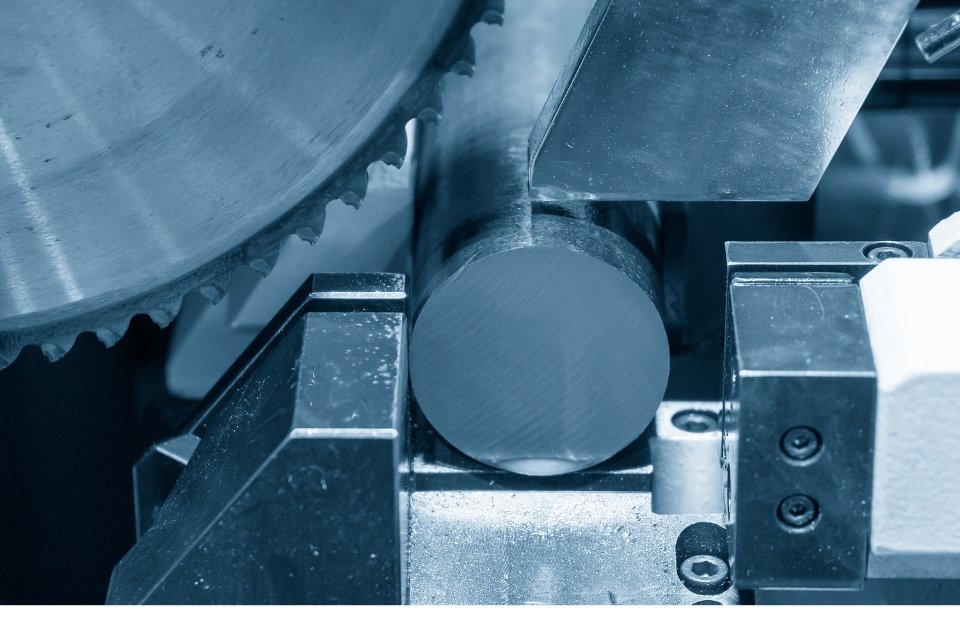
Unlike traditional band saws or abrasive saws, a cold saw utilizes a circular blade with hardened teeth that rotates at a controlled speed to slice through metal workpieces. The "cold" in its name refers to the specific cold sawing technology used during the process. By integrating a water-based cooling circulation system or oil mist spray, the machine actively lowers the cutting temperature while simultaneously flushing away metal chips.
Key benefits of cold saw include:
- Thermal Stability: Reduces material deformation caused by excessive heat.
- Enhanced Blade Life: The cooling system significantly extends the service life of the circular blade.
- High Precision: Delivers more stable, accurate cuts on tubes and solid workpieces compared to abrasive methods.
〈Extended Reading: Which Tube Cutting Machine Is Right for You? A Guide for Every Industry and Need.〉
〈Extended Reading: What is Tube Laser? A Full Guide Comparing Tube Laser & Cold Saws〉
Comparison Table Between Cold Saws and Traditional Cutting Methods
|
|
Cold Saw |
Band Saw |
Abrasive Saw |
|---|---|---|---|
|
Cutting Principle |
Uses HSS or TCT saw blades; adjusts speed based on material, rotating the saw blade for tooth-based cutting. |
Uses a long band saw blade for continuous reciprocating pulling and cutting. |
Uses a grinding wheel to create high-speed friction with metal, generating high heat for abrasive cutting. |
|
Cutting Accuracy |
High accuracy, with a bright cut surface. |
Moderate; large-scale cutting is prone to deviation. |
Low accuracy, with rough cuts and frequent burn marks. |
|
Cutting Speed |
For small to medium-sized tubes and bars, mostly within 160 mm, the speed is faster than band saws, making it suitable for high-volume processing of the same specifications. |
Mainly targeted at large diameter bars, capable of handling materials up to 36 inches (approx. 914mm). The speed is relatively slow, making it suitable for stable, long-term operations. |
Fast speed, but with extremely high consumable wear; suitable for small batch processing. |
|
Post-Processing |
Most can be used directly after cutting, though sometimes chamfering or steel brush (deburring) is required. |
Requires further trimming or grinding. |
Polishing is almost always required to achieve the ideal effect. |
(Mobile users can swipe the table left and right)
How to Choose a Cold Saw? Understanding the Key Differences Between Models
The current market offers a wide spectrum of machinery, from manual and semi-automatic models to fully automatic CNC cold saws, designed to fit varying budgets and output requirements. While some units are optimized for small batch, versatile processing, others are engineered for high volume, 24/7 continuous production lines.
To ensure your investment delivers the best ROI, you must look beyond the initial price tag or technical specifications. Choosing the wrong machine can lead to operational bottlenecks or unnecessary overhead.
Key Factors to Evaluate Before Purchasing:
- Daily Output Requirements: How many cuts per shift does your facility require? High-volume demands typically necessitate automatic feeding systems.
- Continuous Operation: Does your production line run 24/7? Heavy duty models are built for higher duty cycles and better heat dissipation.
- Level of Manual Intervention: Consider your labor costs. A fully automatic cold saw reduces the need for constant monitoring, allowing operators to handle other tasks simultaneously.
- Material Diversity: Are you cutting a single tube size consistently, or do you need a machine that can quickly adapt to various shapes and alloys?
By aligning the machine's capabilities with your specific production line status, you avoid the common pitfalls of under-powered equipment or paying for "over-spec" features you won’t use.
Cold Saw Type 1: Manual Type
Manual cold saws require manual control for most steps, such as clamping, feeding, and retracting the blade. This model is more suitable for small volume, diverse processing needs. Its advantages include high operational flexibility and a relatively low entry threshold, making it a better choice for factories just starting to introduce cold saws or those with limited budgets. This type of manual legacy level cold saw has had market demand from 40 years ago until now, mostly for the DIY market or small batch processing needs.
Cold Saw Type 2: Pneumatic and Hydraulic Types
Pneumatic and hydraulic cold saws control clamping and blade movement through pneumatic or hydraulic systems, so not every step relies on manual operation. This can save a lot of labor, and the cutting force is more stable without fluctuations. This results in more consistent processing quality and generally longer blade life. It is suitable for production lines that already have a certain output and want to make the process more stable. The degree of automation is higher than manual cold saws.
Cold Saw Type 3: Semi-Automatic Type
Semi-automatic cold saws are a choice between manual and fully automatic. Operationally, you only need to place the material and input basic cutting parameters, such as length or quantity. The subsequent actions of clamping, feeding, and cutting will be completed by the machine itself. This model is very suitable for medium-volume production lines; it is not as labor-intensive as manual machines but does not require the high investment cost of fully automatic ones. It is a common choice for many factories when upgrading their cold saw equipment.
Cold Saw Type 4: Fully Automatic Type/NC Type
This cold saw is set up via computer. By entering material specifications, the system will automatically calculate the cutting speed and feed rate. Even feeding, cutting, and optimal cutting layout can be completed automatically. Basically, technicians only need to be responsible for setup and monitoring, and do not need to be operating it constantly. It is suitable for factories requiring long-term continuous production, such as24-hour three-shift factories pursuing high capacity, wanting to reduce labor dependency, or even enterprises developing toward smart manufacturing or unmanned production lines.
Why Choose a Cold Saw? Discover the Benefits Beyond Speed
Increase Capacity and Reduce Labor Costs
Taking fully automated cold saws as an example, using an NC system, the entire cutting process can be completed almost automatically. The processing speed is stable and fast, requiring little manual intervention. Usually, one person can manage several pieces of equipment at the same time, without needing to assign someone to watch every machine, which effectively distributes labor utilization.
Smooth Cuts Reduce Secondary Processing
A cold saw uses a cold cutting method. During the cutting process, the tube is not heated; instead, cutting fluid or oil mist lubrication is used to keep the temperature low, preventing the metal from deforming due to high heat. The resulting edges are typically cleaner, smoother, and have fewer burrs. Consequently, the time required for subsequent chamfering or deburring with steel brushes is significantly reduced, material waste is minimized, and the entire processing workflow becomes smoother.
Applicable to Various Metal Materials and Specifications
Cold saws are highly flexible in application. They can handle common metal materials such as C-channel steel, angle iron, I-beams, stainless steel, aluminum, and copper bars. They are also not limited by shape, capable of cutting round tubes, square tubes, and even solid bars.
Reducing Consumable Waste
Regarding material usage, high-end cold saws offer better control and more precise cutting positions, preventing over cutting or waste. Parts that were previously easily discarded, such as leading and trailing ends, can be minimized to ensure the entire material is used more completely. Over the long term, material utilization rates will significantly improve, not only reducing waste but also directly lowering raw material costs.
Industrial Safety and Environmental Friendliness
Cold saws are much safer than traditional abrasive wheel cutting because they eliminate the risk of high-speed abrasive wheel fragmentation, making operation relatively more secure. Cutting also produces very little dust or sparks, so the site doesn't become hazy or dirty, resulting in a cleaner and easier-to-manage overall working environment. For production lines, this not only improves safety but also makes the work environment more comfortable for employees.
Which Industries Use Cold Saws? It's More Than You Think
Cold saws are widely applied and are not just found in general metal processing plants. They are used in almost any processing scenario that requires cutting tubes or metal parts with high speed and precise dimensions.
- Automotive and Motorcycle Parts Manufacturing: Precision cutting for items such as car seat tubes, exhaust pipes, and chassis components etc. often requires mass production, making it one of the fields with the highest demand for automated tube processing.
- Sports and Fitness Equipment: Metal frames for various fitness equipment usually have fixed specifications and high volumes. The key is to cut quickly and consistently, making cold saws ideal for this type of high-volume material preparation.
- Aerospace and Electronics Industries: Special alloy materials or components require high dimensional accuracy and material stability and are commonly used in precision manufacturing processes.
- Construction Materials and Metal Furniture: From aluminum extrusions used in modern architecture to mass produced steel tubing for furniture, cold saws handle bulk cutting with ease. Common applications include:
- Construction scaffolding and steel structures.
- Office furniture frames and shelving units.
- Decorative aluminum profiles.
〈Extended Reading: What Is Tube Bending Machines? How to Choose the Right One for Your Needs!〉
〈Extended Reading: 5 Core Advantages of CNC Tube Benders, Your Complete Guide for Smart Bender Selection!〉
Cold Saw FAQ: Answers to Your Top Questions
How to extend the service life of metal circular saw blades?
During cutting, you should choose the appropriate cutting fluid (oil mist or coolant) based on the material to ensure the saw blade has sufficient lubrication during operation. This prevents constant friction and overheating, naturally making the blade less prone to wear. Additionally, machine settings are also very important; for materials of different thicknesses and hardnesses, the feeding speed and RPM must be adjusted accordingly, rather than using the same set of values for everything. If the settings are too fast, it increases the load on the blade; if too slow, it may affect efficiency.
Can the same saw blade be used to cut any metal?
No, because the hardness and characteristics of different materials vary greatly; if you insist on using the same type of blade, it can easily become dull, chip teeth, or even affect the cutting quality. For common materials like general steel or aluminum tubes, different types of blades are usually used, such as HSS) or TCT saw blades. For non-ferrous metals like aluminum, HSS blades are generally more suitable.
Is daily machine maintenance complicated?
Many newer models are designed with chip collection systems where chips are automatically gathered, preventing them from getting stuck throughout the machine and making cleanup much more convenient. Most are equipped with a coolant tank, where the coolant is continuously recirculated and filtered. During tube cutting, chips do not splash everywhere, making it easier to organize without much subsequent processing.
What really needs attention are things like whether the hydraulic oil is sufficient, if the cutting oil is at the normal level, and basic checks for pipe blockages. If you follow the SOP sheet and perform regular inspections, it doesn’t take much time.
Looking to Improve Efficiency? Choose SOCO for Your Cold Saw Needs
When choosing a cold saw supplier, in addition to considering hardware specifications, the degree of equipment intelligence and after-sales service are key factors in determining long-term value. SOCO's cold saw series features several exclusive technologies. Among them, the patented MB6 bundle loader can automatically complete the feeding and material change processes, significantly reducing manual intervention and saving approximately 70% of labor and material change time.
Different models also have their own positioning. For example, the 2-tube cutting machine is more oriented toward stable daily production, striking a balance between efficiency and flexibility, making it suitable for production lines with medium to high volumes and regular shipments. If you encounter situations with larger order volumes that require a boost in capacity, the 4-tube cutting machine offers a greater advantage, as it can process multiple tubes simultaneously, significantly increasing overall output speed.
Furthermore, under some special processing conditions, there are different options: short-material cutting machines can improve the stability and precision of short workpieces, while long-material cutting machines are suitable for completing long tube cuts in one go, reducing repeated positioning time. Copper tube cutting machines are specifically designed for non-ferrous metals, providing cleaner cut surfaces and being less prone to deformation.
〈Product Recommendation: Cold Saw (2 Tubes Cutting Line/4 Tubes Cutting Line), TUBE + BAR CUTTING MACHINE, Copper + Brass Tube Cutting〉
〈Extended Reading: How to Choose the Best CNC Tube Bender Machine Manufacturer? A Guide to Global Leading Brands!〉
Conclusion
In this trend of Industry 4.0 and smart manufacturing, if you are still using older machinery, it is easy to fall behind in terms of efficiency and productivity. SOCO has over 40 years of technical experience in this field, focusing long-term on the R&D of metal tube cutting and bending machines. If you are considering equipment upgrades or want to make your production line run more smoothly, contact us now to learn more about different model configurations and find a solution that better meets your site requirements.
〈Extended Reading: Tube Laser Cutting Machine Price & Buying Guide: Power and Automation Explained! 〉
〈Extended Reading: How to Choose a Laser Tube Cutting Machine? Selection Tips, Advantages, and Applications.〉