Why Integrate Laser Tube Cutter and Tube Bender into a Tube Processing Line?
In today’s metal processing industry, “Precision” is no longer just a quality requirement, but a core factor affecting automated welding, assembly efficiency, and product yield. Especially in the automotive parts and fitness equipment industries, from exhaust pipes and stabilizer bars to spin bikes and strength training equipment frames, metal tube processing technology is heavily relied upon.
However, many factories still face the same problems: Hole position deviation after tube bending, Difficult alignment during tube welding, Tolerance accumulation caused by multiple processing steps, High manual finishing costs, Unstable automated welding yield.
These problems are often not caused by a single machine, but by the inability to effectively integrate upstream and downstream processes.As a result, more and more manufacturers are adopting:
Integrated “Laser Tube Cutting + CNC Tube Bending” Processing
Through high-precision cutting and intelligent tube bending control, manufacturers can significantly improve overall processing consistency and production line efficiency.
What is the Integrated Process of Laser Tube Cutting and CNC Tube Bending?
The integrated process of laser tube cutting and CNC tube bending refers to using a Fiber Laser Tube Cutting Machine for high-precision cutting, hole making, and positioning, followed by a CNC tube bender for precision bending and forming. This processing method can effectively reduce: Hole position deviation, Material springback errors, Tube deformation, Poor welding positioning, Manual finishing. requirements
It is now widely used in the following high-precision tube processing industries : Automotive Parts, Fitness Equipment, Metal Furniture, Medical Equipment, Aerospace Components.

Why does Traditional Tube Processing easily cause Hole Position Deviation and Welding Errors?
The traditional tube processing workflow is usually: Tube Saw Cutting → Punching → Manual Positioning → Tube Bending → Welding
The biggest problem with this processing model lies in:
1. Tolerances Continue to Accumulate throughout Every Process
Tubes are repeatedly loaded and unloaded between different machines, and each repositioning may generate slight deviations.
When these errors accumulate during the final tube bending and welding stages, they can easily cause: Misaligned hole positions, Welding deviation, Fixture interference, Workpiece scrap.
Especially in automated welding for automotive parts, even a deviation of only 1 mm may affect the overall welding quality.
2. Traditional Punching easily increases Secondary Processing Costs
Traditional sawing and punching processes often create: Burrs, Tube wall deformation, Uneven cutting surfaces.As a result, additional processes are still required: Deburring, Chamfering, Grinding and Manual finishing. This not only increases processing time but also raises labor costs.
3. Traditional Tooling Lacks Flexibility for Complex Tube Designs
Modern products increasingly emphasize: Lightweight structures, Streamlined appearance, Special-shaped tube processing, Multi-angle structures and Complex joint designs.
Traditional tooling is not only difficult to modify, but also expensive to develop. When products require rapid redesigns, traditional processing methods often lack sufficient flexibility.
How does Laser Tube Cutting improve Tube Processing Precision?
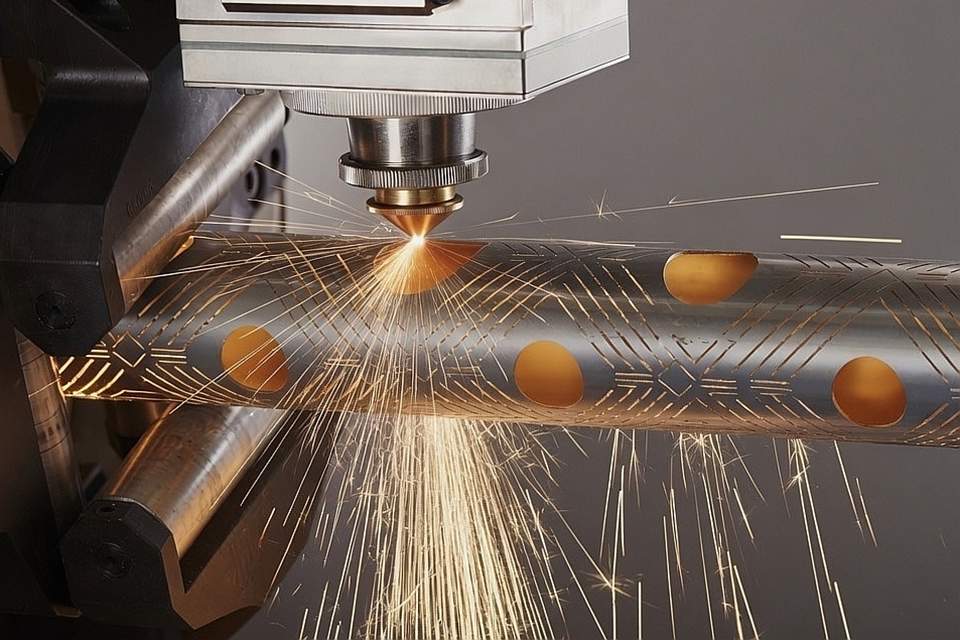
The greatest advantage of Fiber Laser Tube Cutting Technology lies in: Non-contact processing, High-precision cutting, Virtually burr-free cutting, Reduced material deformation and High flexibility for complex processing.
Compared with traditional processing methods, laser tube cutting can directly complete: Special-shaped holes, Bevel cutting, Chamfering, Tab structures and Welding positioning holes. More importantly:
Laser Tube Cutting can Pre-Establish “Tube Bending Positioning References”
For example: Guide holes, Feature cuts and Laser markings.These processing features can become important positioning references for subsequent CNC tube bending. As a result, hole position deviation after bending can be effectively reduced.
How does a CNC Tube Bender reduce Springback and Deformation Problems?
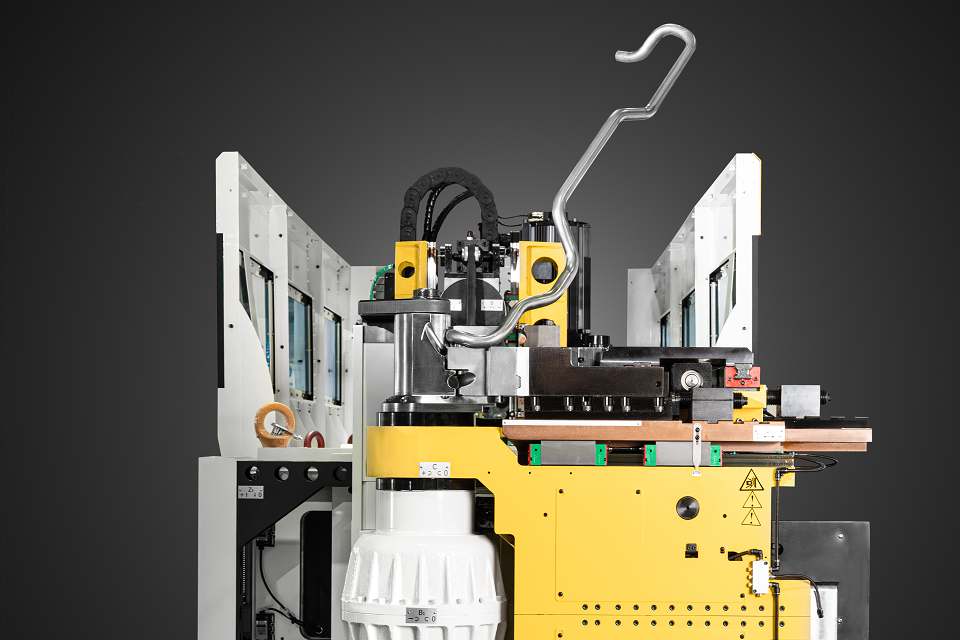
During metal bending, materials typically generate: Springback, Elongation deformation and Torsional deviation.Therefore, high-end CNC tube benders are usually equipped with: Full servo control systems, 3D collision simulation, Springback compensation technology, Automatic angle correction and Intelligent material analysis.
To improve processing consistency. Some advanced CNC Tube Benders can even identify laser processing features and automatically correct positioning direction, further improving the precision of multi-bend tube parts.
Why does the Automotive Industry especially need the Integration of Laser Tube Cutting and CNC Tube Bending Processes ?
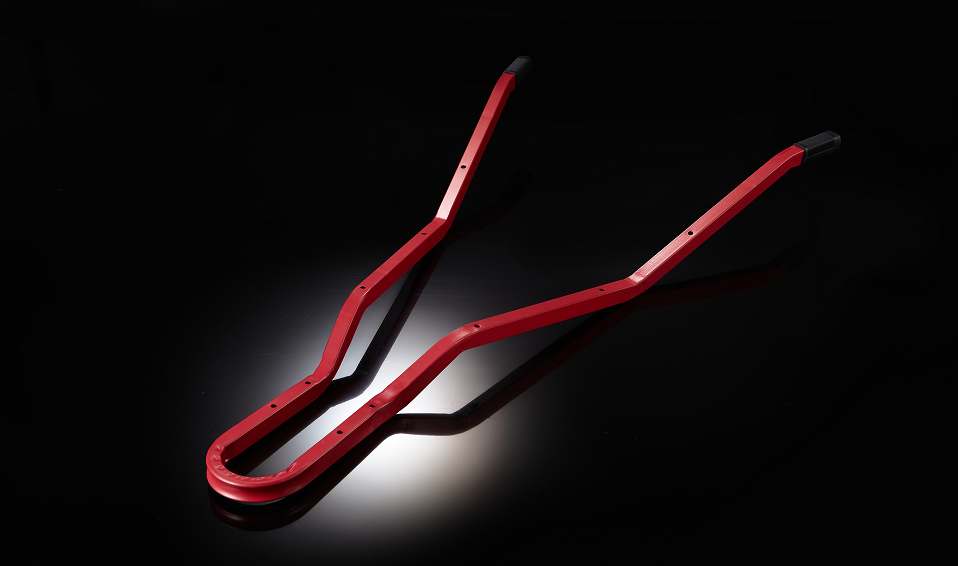
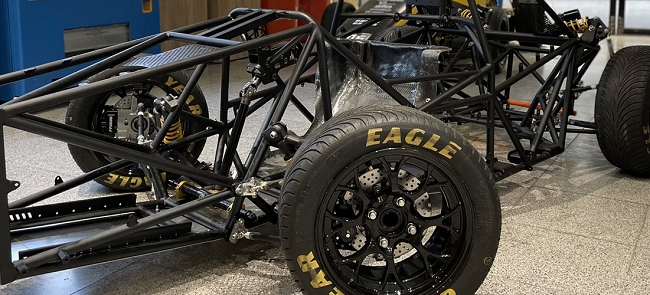
In the Automotive Industry, many parts simultaneously require: Complex curved surfaces, High-strength requirements, Multiple hole positions, Automated welding compatibility. For example: Exhaust Pipe, Anti-Roll Bar, Car Frame and Seat Frame.
If tube bending precision is insufficient, it may lead to: Welding failure, Automated production line stoppage, Lower production yield and Workpiece interference.
Through the integration of laser tube cutting and CNC tube bending, manufacturers can significantly improve Welding consistency, Assembly precision, Automation stability and Production efficiency.
How does the Fitness Equipment Industry improve Efficiency through Intelligent Tube Processing?
Fitness Equipment manufacturing typically uses large quantities of: Round tubes, Square tubes and Oval tubes. And particularly emphasizes Surface flatness, Assembly stability, Welding appearance and Streamlined design.
For example: Treadmill, Spin Bike and Multi-Gym.By using laser tube cutting to pre-create tab and positioning structures, then combining CNC tube bending for streamlined shaping, subsequent welding and assembly processes can be greatly simplified. Many factories can even reduce manual alignment time by more than 10%.

In the era of Smart Manufacturing, Equipment Integration capability is more Important than Single Machine Performance
Manufacturing competition today is no longer just about: “Which machine is faster?”Instead, it is about:
“Can Different Machines Truly Work Together?”
Whether software data can communicate with each other? Whether processing parameters can be synchronized? Whether tube cutting and bending coordinates are consistent? Whether simulation results match actual production? This is also the core direction of Smart Manufacturing and Industry 4.0.
How does SOCO Build a Complete Intelligent Tube Processing Solution?
SOCO Machinery, with over 40 years of experience in tube processing, has long focused on: Fiber Laser Tube Cutting Machine, CNC All Electric Tube Bender, Automatic Loading System, Intelligent Tube Processing Line.
SOCO’s exclusive i2 intelligent control system allows seamless integration between tube cutting and tube bending processing data, significantly reducing manual conversion and positioning errors.From front-end laser cutting to back-end CNC precision tube bending and 3D collision simulation, SOCO provides a complete one-stop intelligent tube processing solution.
Conclusion | True Competitiveness comes from Process Integration Capability
The future of metal tube processing is not only about processing speed. It is also about: Whether precision remains stable? Whether automation runs smoothly? Whether production yield improves? Whether labor dependency decreases? Whether processes can be quickly replicated?
When laser tube cutting Machine and CNC tube bending Machine are truly integrated, the result is not only higher processing efficiency. It also represents a factory moving toward:
SOCO offers smarter tube bending solutions with higher precision and lower defect rates.
FAQ
Why is CNC Tube Bending still needed after Laser Tube Cutting?
Laser tube cutting machine is mainly responsible for high-precision cutting, hole making, and positioning, while CNC tube bending machine is responsible for tube bending and angle control. Only by integrating both can final assembly precision and welding consistency be ensured.
How does CNC Tube Bending reduce Hole Position Deviation?
High-end CNC tube benders use servo control, springback compensation, and 3D simulation technology to automatically correct material deformation and bending angles, reducing hole position deviation after bending.
What Types of Tubes are suitable for Laser Tube Cutting?
Fiber Laser Tube Cutting can process: Round tubes, Square tubes, Oval tubes, Special-shaped tubes, Stainless steel tubes, Aluminum tubes and Carbon steel tubes. It is suitable for automotive, fitness equipment, furniture, and medical equipment industries.
Why is Intelligent Tube Processing becoming more Important?
Because modern manufacturing is facing: High-mix low-volume production, Labor shortages, Increasing automation demands and Higher precision processing requirements. Through intelligent integration, manufacturers can effectively improve processing efficiency and product consistency.
The integration of laser tube cutting and CNC tube bending allows manufacturers to achieve higher precision, lower welding deviation, improved automation stability, and better production consistency for automotive and fitness equipment applications.