If All-Electric Tube Benders are so good, Why does Heavy Industry still use Hydraulic Tube Benders?
As manufacturing rapidly moves toward electrification and smart manufacturing, many factories are beginning to focus on the advantages of all-electric tube benders in terms of speed, precision and automation; however, in heavy industries such as shipbuilding, petrochemicals, energy, heavy construction machinery and large steel structures, heavy-duty hydraulic tube benders still play an irreplaceable role. Why does heavy industry still rely heavily on hydraulic systems today, when all-electric tube bending technology is developing rapidly? This article will help you understand the core value of heavy-duty hydraulic tube benders and how companies should evaluate equipment selection from the perspectives of operating principles, technical comparison, industrial applications, processing challenges and smart manufacturing trends.
What Is a Heavy-Duty Hydraulic Tube Bender? Why Does Heavy Industry Still Need It?
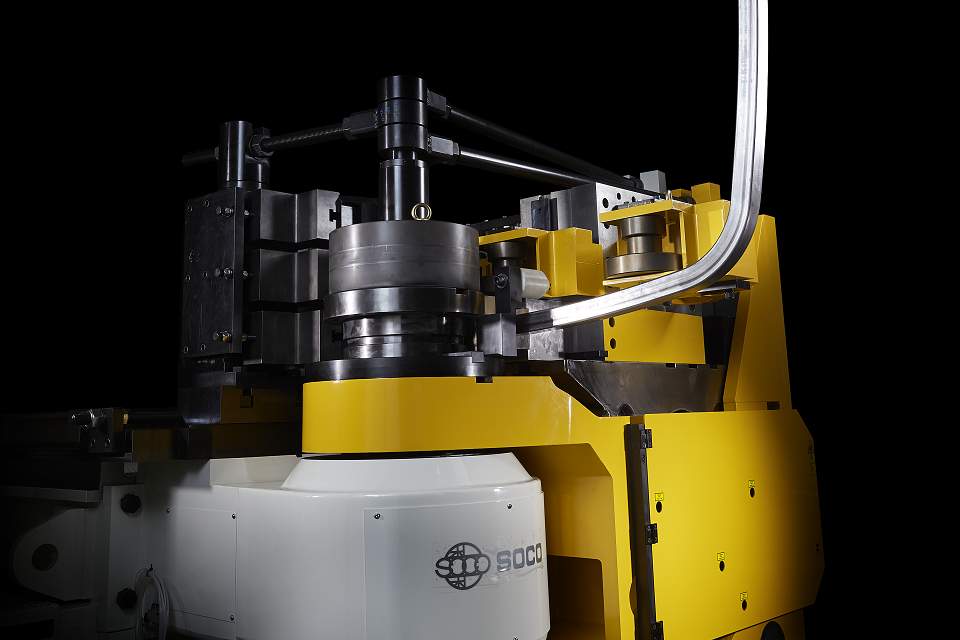
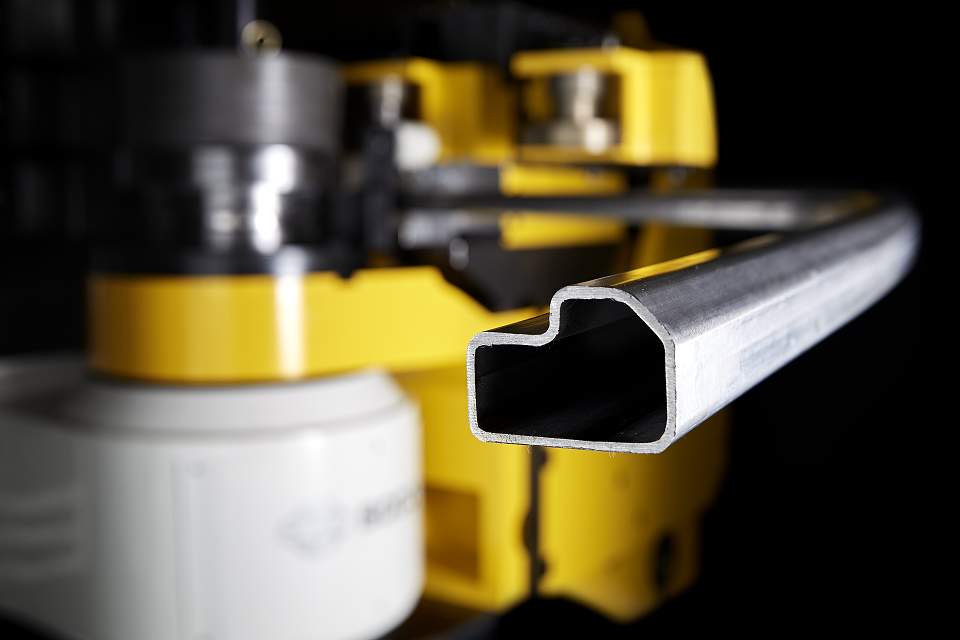
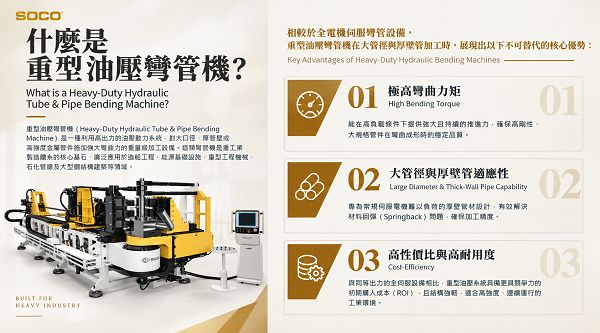
A Heavy-Duty Hydraulic Tube & Pipe Bending Machine is a heavy-duty processing machine that uses a high-output hydraulic power system to apply powerful bending forces to large-diameter, thick-wall or high-strength metal tubes. This type of tube bender is a core foundation of the heavy industrial manufacturing system and is widely used in shipbuilding engineering, energy infrastructure, heavy construction machinery, petrochemical pipelines and large steel structure buildings.
Compared with All-Electric Tube Bending Machines, heavy-duty hydraulic tube benders demonstrate the following irreplaceable core advantages when processing large-diameter and thick-wall tubes:
- High Bending Torque: Provides powerful and continuous driving force under high-load conditions, ensuring stable quality when bending high-rigidity, large-sized tubes.
- Adaptability to Large-Diameter and Thick-Wall Tubes: Specifically designed for thick-wall tubes that conventional servo motors have difficulty handling, effectively solving material Springback problems and ensuring processing accuracy.
- Cost-Efficiency and High Durability: Compared with all-servo equipment with equivalent output, heavy-duty hydraulic systems offer a more competitive initial purchase cost (ROI), while their robust construction makes them suitable for high-intensity, continuous industrial operation.
Working Principle of a Heavy-Duty Hydraulic Tube Bending Machine
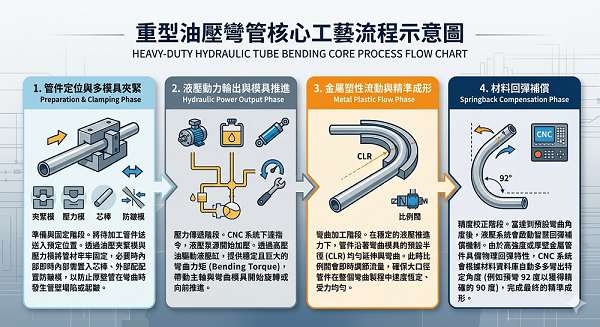
The core operating mechanism of a heavy-duty hydraulic tube bender is to use high-pressure oil generated by a high-efficiency hydraulic system to drive hydraulic cylinders, which then drive the bending die (Bending Die) to apply powerful and continuous torque to the tube, causing the metal tube to undergo precise plastic deformation under controlled conditions. In modern high-end tube bending processes, the system usually integrates a CNC numerical control system and Proportional Valves technology to precisely control hydraulic flow and pressure, thereby ensuring angular accuracy when processing large-diameter tubes and consistency in high-volume production.
In actual industrial processes, heavy-duty hydraulic tube bending can be divided into the following key steps:
- Tube Positioning and Multi-Die Clamping: Preparation and fixing stage. The tube to be processed is moved into the predetermined position. The tube is firmly secured using the hydraulic Clamp Die and Pressure Die. When necessary, a Mandrel is inserted inside the tube and a Wiper Die is configured externally to prevent wall collapse or wrinkling of the thick-wall tube during bending.
- Hydraulic Power Output and Die Advancement: Pressure transmission stage. The CNC system issues commands and the hydraulic pump begins pressurizing. High-pressure oil drives the hydraulic cylinder to provide stable and massive Bending Torque, driving the spindle and bending die to begin rotating or advancing.
- Metal Plastic Flow and Precise Forming: Bending process stage. Under stable hydraulic driving force, the tube extends and bends uniformly along the predetermined radius of the bending die (CLR - Center Line Radius). At this time, the proportional valve adjusts the flow rate in real time to ensure that large-diameter tubes maintain a constant speed and uniform force throughout the bending process.
- Springback Compensation: Precision correction stage. After reaching the preset bending angle, the hydraulic system activates the intelligent springback compensation mechanism. Because high-strength or thick-wall metal tubes have physical springback characteristics, the CNC system automatically bends beyond the target angle according to the material database (for example, pre-bending to 92 degrees to obtain an accurate 90 degrees), completing the final precise forming.
Heavy-Duty Hydraulic Tube Bender vs. All-Electric Servo Tube Bender: Key Technical Differences at a Glance
In modern tube processing, the Heavy-Duty Hydraulic Tube Bender and the All-Electric Servo Tube Bender represent two distinct approaches to tube bending technology. The following comparison focuses on the key technical considerations for heavy-industry equipment procurement and engineering design:
| Type | Heavy-Duty Hydraulic Tube Bender | All-Electric Servo Tube Bender |
|---|---|---|
| Maximum Output Force / Bending Torque | Extremely high (hydraulic cylinders multiply output force, with minimal power loss under high-load conditions) | Medium to high (limited by the maximum output capacity of the servo motors and gear reducers) |
| Core Tube Diameter (OD) | Large-diameter and thick-wall tubes (typically Ø100 mm, Ø168 mm, and even Ø220 mm or larger) | Small- to medium-diameter and thin-wall tubes (commonly used for precision processing below Ø90 mm) |
| Material Wall Thickness Capability | Extremely strong (high-pressure hydraulics can readily overcome the plastic deformation resistance of rigid, thick-wall tubes) | Moderate (thick-wall tubes may cause servo motor overload or accelerate gear reducer wear) |
| Initial Machine Cost (ROI) | Moderate (high cost-performance ratio; significantly lower cost than an all-electric machine with equivalent high-output specifications) | Very high (high-power servo motors and high-rigidity mechanical structures significantly increase the machine cost) |
| Long-Term Maintenance Cost | Low to moderate (hydraulic components are mature and relatively economical to replace, with regular hydraulic oil changes required) | High (servo controllers and high-precision mechanical components can be costly to repair when damaged) |
| Processing Accuracy & Repeatability | High (modern CNC proportional-valve control can achieve excellent accuracy) | Extremely high (fully digital multi-axis synchronization is well suited to complex three-dimensional bending) |
| Key Global Industrial Applications | Shipbuilding, petrochemical pipelines, heavy construction machinery, and large architectural steel structures | Automotive exhaust pipes, aerospace tubing, high-end furniture, and precision medical equipment components |
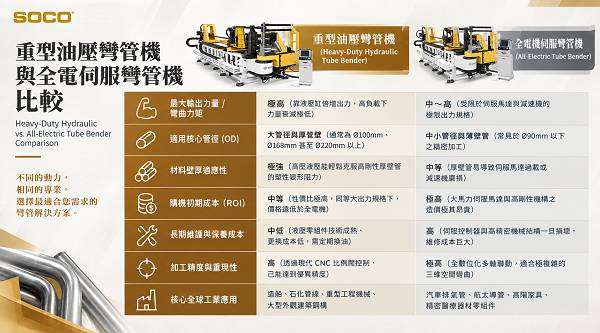
How Should B2B Procurement Choose? Look at “Power Requirements” or “Precision Requirements” First
Heavy-duty hydraulic tube bending machines are synonymous with “high output, large-diameter tube processing and high cost-performance (high ROI).” When the tubes are large and thick-walled, the initial equipment investment budget needs to be controlled, and the processed parts do not require extremely high precision standards, the hydraulic tube bender is the absolute first choice combining durability and economic efficiency.
All-electric servo tube benders are suitable for precision manufacturing where “precision and complexity come first, with high unit-value output.” When the workpieces are small- to medium-diameter tubes with extremely complex multiple bending angles, and strict requirements are placed on surface appearance and repeat positioning accuracy (such as in the aerospace and automotive industries), it is recommended to invest the higher budget required for an all-electric machine.
Five Major Industrial Applications of Heavy-Duty Hydraulic Tube Benders
With unmatched ultra-high tonnage output and high-rigidity forming capabilities, heavy-duty hydraulic tube benders have become indispensable core manufacturing equipment in global heavy industrial supply chains and large infrastructure projects. They are mainly deeply applied in the following five high-threshold key industries:
4.1 Shipbuilding & Marine Engineering
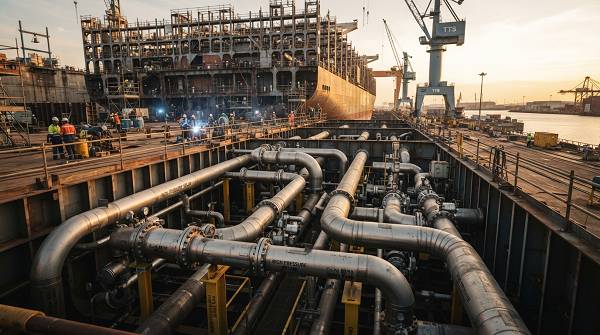
Pipeline systems in the shipbuilding industry are like the blood vessels of a giant ship. Heavy-duty hydraulic tube benders are mainly used to process main engine fuel system pipelines, seawater cooling systems, ballast water pipelines and complex marine hydraulic power pipelines. Because marine operating environments are harsh, these large-diameter tubes must withstand extremely high internal pressure and external vibration. Hydraulic tube bending can ensure that tubes have high reliability and long-term durability after forming, meeting the strict requirements of international classification societies. Examples include Cupro-Nickel Pipes, Stainless & Duplex Stainless Steel, and Alloy Steel Pipes.
4.2 Petrochemical & Energy Sector
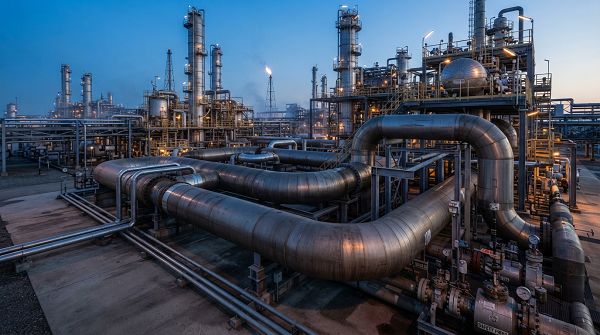
In the construction of refineries, natural gas receiving stations and power plants, large quantities of high-pressure fluid transmission pipelines, high-temperature steam pipelines and special metal tubes operating in corrosive environments are required. Heavy-duty hydraulic tube benders can achieve one-piece forming of large-diameter, thick-wall tubes, greatly reducing the use of traditional Welded Elbows, thereby lowering the risk of leakage at weld seams in high-pressure corrosive environments and improving the overall structural safety of pipelines.
4.3 Construction Machinery & Agriculture Equipment
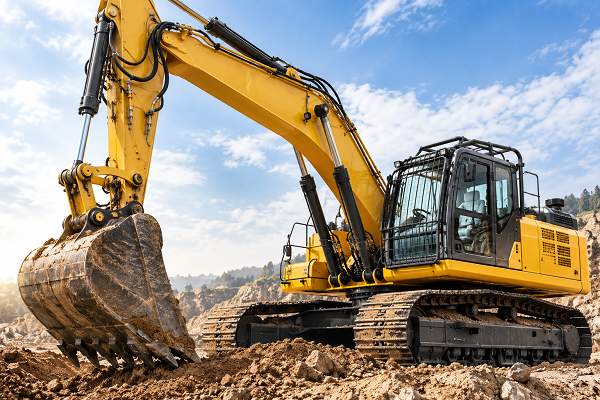
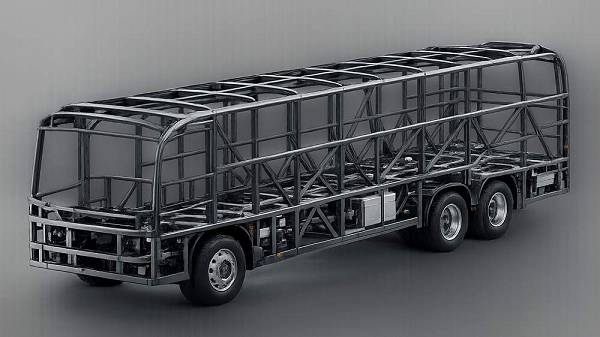
Widely used in the manufacturing of Excavators, Cranes, large bulldozers and agricultural machinery. Such machinery requires Hydraulic Rigid Tubing for transmitting high hydraulic power, as well as high-strength structural components forming the core vehicle chassis and ROPS Structure for vehicle body protection. Robust and strong steel tube structures can provide the highest level of safety protection for equipment and operators during high-intensity, heavy-load construction site operations.
4.4 Infrastructure & Heavy-Duty Transport Piping
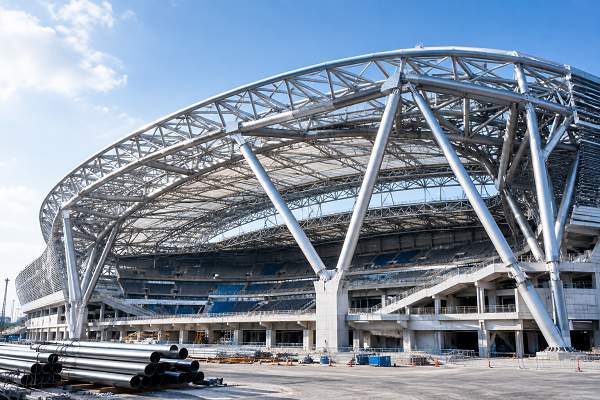
In the huge spatial structures of modern buildings (such as airport terminals, high-speed rail station roofs and large stadiums), large-sized metal tubes are widely used as primary Architectural Structural Steel beams; in addition, heavy-duty hydraulic tube benders are also core tools for precision forming of large steel tubes used in underground urban pipelines and large-diameter fluid and gas transmission pipelines for international oil and gas transportation.
4.5 Commercial Vehicle Truck Chassis Beam & Structures
The chassis and exhaust systems of commercial heavy trucks, tractor-trailers and large buses are critical components that bear the load and dynamic impact of the entire vehicle. During manufacturing, high-strength steel (High-Strength Steel), metal tubes with ultra-thick walls, and large-sized chassis longitudinal beams and structural beams (Truck Chassis Beams) are usually required. Only by relying on the massive bending torque of heavy-duty hydraulic tube benders can high-precision, high-strength tube bending be completed while maintaining the structural integrity of the metal tubes.
Why Does Global Heavy Industry Still Rely Heavily on Hydraulic Tube Bending Technology?
As Industry 4.0 and the wave of full electrification sweep across the globe, all-electric servo equipment has demonstrated outstanding performance in the small- and medium-diameter tube segment; however, in core heavy industries such as shipbuilding, petrochemicals and heavy energy equipment, heavy-duty hydraulic tube bending technology remains firmly in the mainstream and irreplaceable. The main reasons lie in the stringent requirements of heavy industrial production environments for the following three core indicators:
- Extreme “Cost-to-Power Ratio”: Processing large-diameter, thick-wall metal tubes (such as high-rigidity tubes with an outer diameter of more than 130mm) requires enormous thrust and torque. If fully electric servo motors and oversized reducers are used, equipment purchasing and R&D costs will increase exponentially; in comparison, hydraulic systems can provide stable and massive tonnage output with a highly competitive cost structure.
- High Fault Tolerance Under Extreme High-Load Conditions: Materials processed in heavy industrial applications often have slight physical material tolerances (such as uneven batch hardness and slight variations in wall thickness). Hydraulic systems have natural fluid physical buffering characteristics and significantly higher tolerance for material deformation and uneven hardness than rigidly driven electric systems, effectively preventing motors from burning out due to sudden overloads.
- Extremely High Reliability for All-Weather Operation (Heavy-Duty Reliability): In heavy industrial factories filled with dust, vibration and high temperatures, equipment’s “resistance to harsh conditions” and “availability” are far more important than processing speed alone. Hydraulic systems are robust and technologically mature, maintaining an extremely low failure rate even under harsh environments with years of continuous operation, while on-site maintenance is relatively easy.
Four Common Technical Challenges in Heavy-Duty Tube Bending
In modern processes pursuing high-precision forming quality, heavy-duty hydraulic tube bending must overcome the following four engineering challenges caused by the physical characteristics of materials through advanced Tooling Design and proportional control systems:
- Springback Effect: After high-strength thick-wall tubes are released from bending, the metal material undergoes elastic recovery, causing the angle to increase. This requires precise pre-bending compensation control based on the equipment’s material database.
- Wall Thinning: During bending, the material on the outer side of the tube (Extrados) undergoes severe stretching, resulting in a reduction in tube wall thickness. The wall thinning ratio is generally within 15% ~ 18%. How to control Wall Thinning Control within the safety limits of international regulations (such as ASME and EN standards) is a core technology involving the coordination of tooling and thrust.
- Stress Concentration & Wrinkling: The inner side of the bend (Intrados) is highly prone to material accumulation and wave-like wrinkling due to strong compression. This must be eliminated through precise interference between the Wiper Die and Mandrel.
- Die Wear and Dynamic Compensation Issues: Under repeated friction at high strength and high tonnage, the surfaces of the bending die and clamping die gradually wear, causing dimensional drift in processing. High-end equipment needs to provide dynamic fine-tuning of process parameters to extend die life and maintain processing consistency.
The Future of Heavy-Duty Hydraulic Tube Bending Machines: From Standalone Equipment to Smart Manufacturing
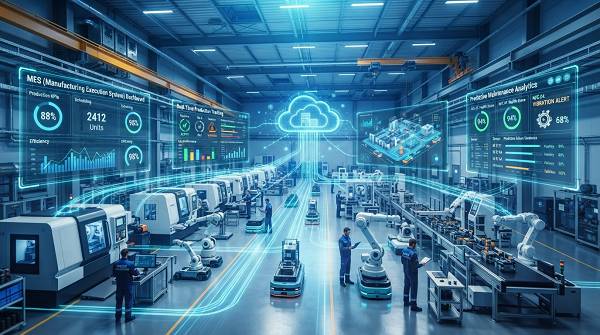
Future heavy-duty hydraulic tube bending equipment will no longer be an isolated mechanical unit, but will become a core intelligent production unit fully integrated into digital factories. In response to the transformation of global supply chains, heavy-duty hydraulic tube benders are accelerating their development across the following four major technological dimensions:
- Automation Bending Cells Integration: Deeply integrate heavy-duty hydraulic tube benders with Robotic Arms, automatic loading and unloading storage systems, automatic tube turning and weld seam detection systems to achieve an automated processing workflow from raw materials to finished products.
- AI-based Springback Correction: By introducing intelligent control algorithms, the system can use data returned by real-time Sensors to detect the material’s reaction force during bending, automatically calculate and correct the springback angle, and minimize human setup errors. AICON detection can also be used, and after networking with the tube bender, automatic compensation can be performed. The most basic option is to use CMM to manually measure the tube and return the compensation value.
- Lights-Out Manufacturing: Through highly integrated intelligent process flows, large-diameter heavy tube processing can achieve long periods of unattended, continuous autonomous production, greatly increasing the factory’s nighttime production capacity.
- Deep Integration with MES / ERP Factory Management Systems: Equipment fully supports Industrial Internet of Things (IIoT) communication protocols (such as OPC UA), uploading production data (bending angle, processing pressure and production records) to the Manufacturing Execution System (MES) and ERP in real time, enabling production traceability and Predictive Maintenance of equipment.
Conclusion:
Master Heavy Industry’s Essential Needs and Plan for Green Transformation Through Smart Manufacturing
As discussed throughout this article, heavy-duty hydraulic tube benders remain an unshakable core foundation of the global heavy industrial manufacturing system in large-diameter processing fields such as shipbuilding, petrochemicals, heavy construction machinery, large steel structures and commercial vehicle chassis, thanks to their irreplaceable ultra-high bending torque, high-load stability and highly competitive equipment purchase return on investment (ROI).
In the face of the digital transformation of global manufacturing, modern heavy-duty hydraulic tube bending technology has long moved beyond the stereotype of traditional manual craftsmanship. Through the deep integration of CNC numerical control, high-precision proportional valve technology, dynamic fine-tuning of process parameters and intelligent algorithm-based springback compensation, hydraulic tube benders can not only easily overcome the deformation resistance of high-strength steel and thick-wall tubes, but can also control outer-side wall thinning and inner-side wrinkling within the strict safety limits of international regulations (such as ASME and EN standards), demonstrating industrial-grade high precision comparable to all-electric equipment.
Looking ahead: The “standalone processing capability” of equipment has extended into “one part of an intelligent factory-wide system.” Future heavy-duty hydraulic tube bending equipment will accelerate toward Automation Bending Cells and Lights-Out Manufacturing. Through IIoT Industrial Internet of Things communication protocols (such as OPC UA), equipment can be deeply integrated with factory MES / ERP systems to achieve real-time production traceability and Predictive Maintenance, helping global manufacturing achieve high productivity and high precision while perfectly aligning with the development trends of green, low-carbon and sustainable supply chains.
Professional Procurement Recommendations
Professional Procurement Recommendations: When selecting heavy-duty tube bending equipment, evaluation criteria should not remain limited to mechanical power output. Instead, manufacturers should be comprehensively evaluated based on customized precision Tooling Design, intelligent software control system development, and decades of technical experience in global heavy industry. Choosing a trusted partner with practical experience in global markets and the ability to provide complete intelligent automation solutions is the key investment for enterprises to maintain core competitiveness in the Industry 4.0 era.
FAQ|Frequently Asked Questions About Heavy-Duty Hydraulic Tube Benders
1. What is a heavy-duty hydraulic tube bender?
A heavy-duty hydraulic tube bender is industrial equipment that uses hydraulic power to generate high torque for bending large-diameter or thick-wall metal tubes. Its main feature is the ability to maintain stable bending accuracy under high-load conditions, making it suitable for heavy industrial manufacturing environments.
2. What is the working principle of a heavy-duty hydraulic tube bender?
A heavy-duty hydraulic tube bender provides stable pressure through a hydraulic system, driving the bending die to apply force to the tube, causing the metal to undergo plastic deformation and form a predetermined angle. The basic process includes: fixing the tube, applying force through the die to bend it, continuous pressure output from the hydraulic system, controlling the bending angle, and compensating for material springback.
3. What are the differences between a heavy-duty hydraulic tube bender and an electric servo tube bender?
The main differences between a heavy-duty hydraulic tube bender and an electric tube bender are as follows: Hydraulic tube bender: lower purchase cost. High output force, suitable for large diameters above 110mm and heavy industrial applications. Electric servo tube bender: servo units have a high unit price, so when high output bending is required, the purchase cost is very high. High control accuracy, suitable for small- and medium-diameter tubes and precision processing. The conclusion is: first, there is a difference in cost. Second, hydraulic systems focus on power requirements, while electric servo systems focus on precision requirements.
4. What industries are heavy-duty hydraulic tube benders mainly used in?
Heavy-duty hydraulic tube benders are mainly used in the following industries: shipbuilding (fuel and cooling pipelines), petrochemical and energy industries (high-pressure transmission pipelines), construction machinery (vehicle structures), heavy steel structures and infrastructure.
5. Why does heavy industry still use hydraulic tube bending technology?
In heavy industrial environments, stability is usually more important than speed. Reasons why heavy industry still relies on hydraulic tube bending technology include: the ability to withstand high-load processing requirements, suitability for large-diameter tubes, high processing stability and strong reliability during long-term operation.
6. What are the common technical problems in heavy-duty tube bending?
Common technical problems include: material Springback, tube wall thinning, stress concentration and die wear. These problems usually require compensation through tooling design and control systems.
7. What is tube bending Springback?
Tube bending Springback refers to the phenomenon in which metal undergoes angular springback due to elastic recovery after bending. This phenomenon affects final forming accuracy, so compensation design is required in high-precision processing. Some manufacturers use traditional CMM manual measurement, while others use AICON equipment for automatic measurement. In a networked environment, the compensation value is automatically returned after bending, and compensation is applied during the next bending operation.
8. What tube diameters are suitable for heavy-duty hydraulic tube benders?
Heavy-duty hydraulic tube benders are suitable for processing large-diameter and thick-wall tubes, and are generally used for heavy industrial and large structural applications. The actual applicable range depends on equipment specifications and tooling design.
9. Can heavy-duty hydraulic tube benders be automated?
Yes. Modern heavy-duty hydraulic tube benders can integrate CNC numerical control systems and automated production lines (automatic loading and unloading Auto Loader and Unloader) to improve precision and production efficiency.
10. What are the future development trends of heavy-duty hydraulic tube benders?
Future development trends include: integration of automated tube bending cells, AI compensation and angle correction, Lights-Out Manufacturing, and integration with smart factory systems (MES/ERP). Further Reading How to Choose a CNC Tube Bender Supplier? Global Leading Brands Recommended! 5 Major Advantages of CNC Tube Benders: An Essential Guide for Enterprise Equipment Selection! What Are the Advantages of All-Electric Tube Benders Compared with Hydraulic Tube Bending? Why Choose an All-Electric Tube Bender?
Further Reading
Need to Evaluate Heavy-Duty Tube Bending Equipment?
When selecting heavy-duty tube bending equipment, in addition to mechanical output, tooling design, control systems, automation integration and long-term technical support should also be evaluated. If your products involve large-diameter, thick-wall or high-strength tubes, you can further discuss suitable tube bending processing solutions with the SOCO team.