Advantages of All-Electric Tube Benders Over Hydraulic Systems: Why Choose All-Electric?
Industry Know-How 2025/05/29
What is an all-electric tube bender?
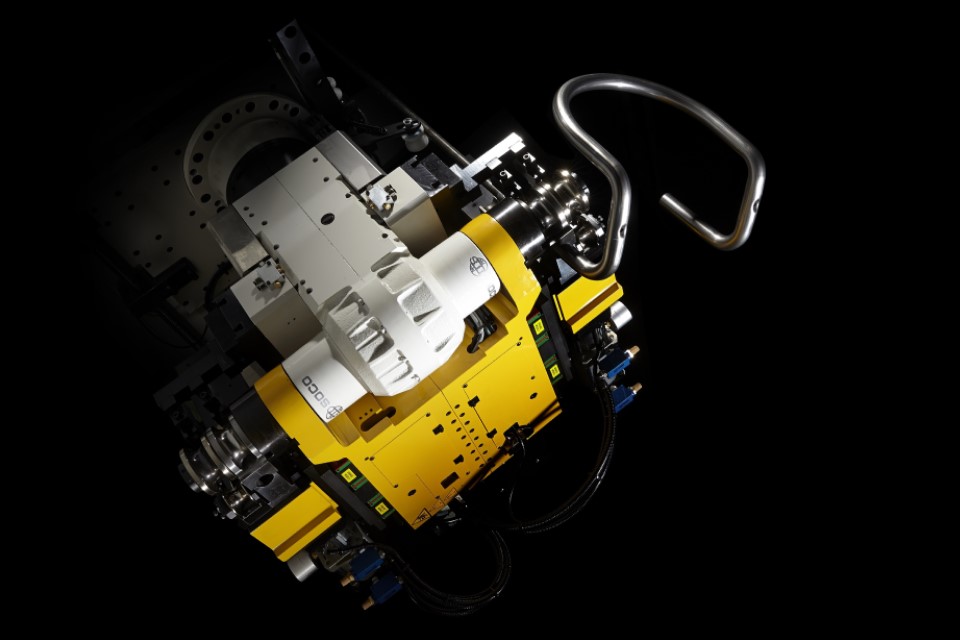
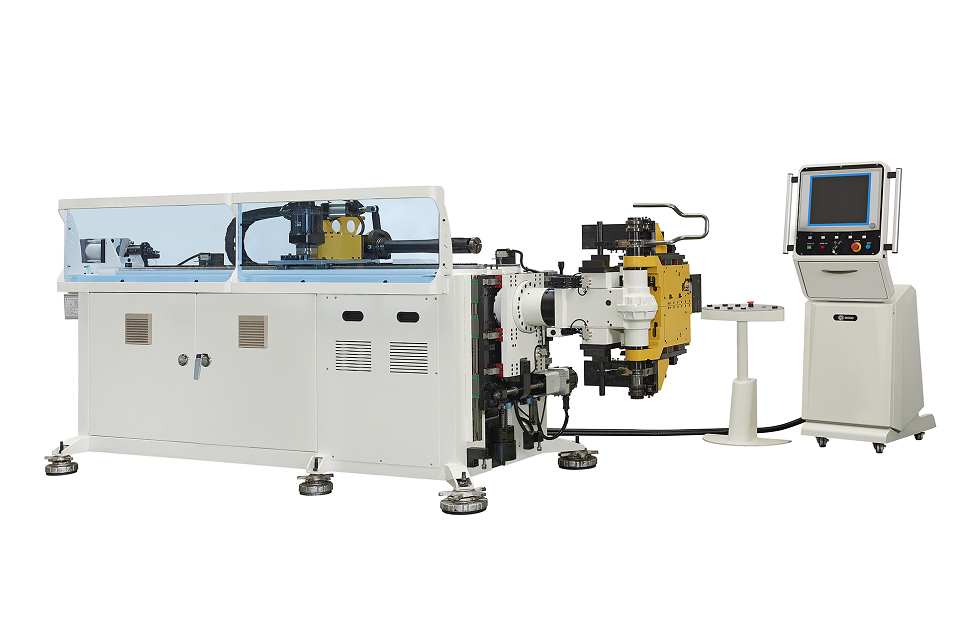
All-electric tube benders use multi-axis servo motors to drive all movements, such as feeding, rotation, bending, and clamping. Each axis can be independently controlled to achieve synchronized precision operation, providing optimal production speed and accuracy. This type of machine is particularly suitable for high precision, high efficiency, small batch production, and automated processes.What is a hydraulic tube bender?
Hydraulic tube benders use hydraulic cylinders to generate bending force, relying on hydraulic oil to drive the bending head or clamps. This design was widely used in the past for the production of large diameter and high strength tubes, but it is limited by the stability of the hydraulic system, temperature fluctuations, and maintenance needs.Are all-electric tube benders faster? How much faster is the efficiency?
According to actual test data, all-electric tube benders improve production efficiency by more than 50% compared to hydraulic and hybrid systems. Their servo motors can synchronously optimize every action, eliminating the need to wait for hydraulic pressure to build up.Faster cycle times (cylce time) mean more output and shorter delivery times (leadtime). In the era of industrial automation, all-electric tube benders can quickly respond to changing market demands, being competent for both mass production and customized small batch production.
Do all-electric tube benders have higher precision than hydraulic tube benders?
Taking an example of the all-electric tube bender from SOCO, a tube bender manufacturer located in Taichung, Taiwan, the repeatable bending accuracy can reach +/- 0.05 degrees, which is far superior to traditional hydraulic systems. Due to the lack of effects from thermal expansion, contraction, or leakage of hydraulic oil, all-electric control brings stable and consistent bending quality.Why is production simulation needed before tube bending?
Using tube bending simulation software (such as i2 software) allows for interference checks, path predictions, and tooling validations to be completed before official production. This not only prevents machine collisions and equipment damage but also significantly reduces trial run time and material waste.How much time is required for production simulation before tube bending?
i2 intelligent software can import 3D CAD files and complete NC programming and simulation for complex parts within 5 minutes. This process compresses trial production steps that originally took several hours into a few minutes, significantly shortening product time-to-market.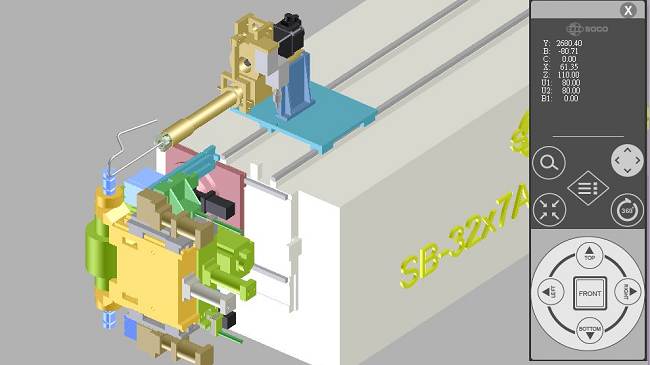
Are all-electric tube benders more environmentally friendly?
Yes, the environmental performance of all-electric tube benders is superior to hydraulic systems. According to SOCO's test data, the electricity consumption of all-electric tube benders is saved by more than 50% compared to hydraulic systems. This is because servo motors only consume energy when operating, rather than running continuously.In addition, hydraulic systems require replacement of approximately 200-300L of hydraulic oil each year, which not only generates waste oil but also causes environmental and maintenance burdens. In contrast, all-electric systems have zero oil pollution and operate quietly with low noise (only 55~60 decibels), significantly enhancing the factory working environment.
Can all-electric tube benders be integrated with automation equipment?
Of course. The digital interface design of all-electric systems makes them easy to integrate with other processes, such as tube cutting machines, chamfering machines, automatic feeding, and robotic arms. Taking SOCO's product line as an example, all-electric tube benders can be paired with i2 software to establish a complete smart manufacturing workstation, achieving unmanned production from feeding to discharging.The importance of tube bender tooling?
Regardless of whether it is a hydraulic or all-electric system, the design of tube bending tooling determines product accuracy and the yield of tube bending output. Tube bender manufacturers had better establish their own tooling design teams and tooling processing factories, so as to be able to provide a full range of tube bending tooling design and manufacturing services, ensuring the best results in coordination with the machines, and reducing tooling change time and tooling wear.Comparison: All-Electric Tube Bender vs Hydraulic Tube Bender
| Feature / Attribute | All-Electric Tube Bender | Hydraulic Tube Bender |
|---|---|---|
| Power Source | Multiple independent servo motors | Hydraulic oil system with pumps and cylinders |
| Control & Axis Movement | Each axis is independently controlled for synchronized motion | Sequential movement, shared control among axes |
| Speed & Productivity | Up to 50% faster cycle time; no pressure build-up delay | Slower; time needed for hydraulic pressure stabilization |
| Bending Precision | ±0.05° repeatability; consistent under all conditions | Accuracy affected by temperature, oil leakage |
| Energy Consumption | Uses energy only when needed; up to 50% power savings | Continuous motor operation leads to higher power use |
| Environmental Impact | Oil-free, clean, and eco-friendly | Requires 200–300L oil/year; risk of spills and pollution |
| Noise Level | Quiet operation (55–60 dB) | Louder machinery; may exceed 70 dB |
| Maintenance Requirements | Low maintenance; no fluids involved | Regular oil changes, filter cleaning, leak checks |
| Automation & Integration | Ideal for Industry 4.0; easy to connect with robots, cutters | Difficult to automate; less flexible for modern factories |
| Initial Investment | Higher upfront cost, lower lifetime cost | Lower initial cost, but higher ongoing expenses |
| Production Suitability | High-precision, small-batch, custom and automated lines | Heavy-duty, large-diameter, low-precision high-volume work |
| Factory Cleanliness | Clean, dry, office-like work environment | Oil spills can cause slippery, hazard-prone areas |
Conclusion: Why Choose All-Electric Tube Benders?
High Precision and Efficiency: Increase production speed by 50%, with bending errors less than 0.05 degrees Environmentally Friendly and Energy-Saving: Save 50% energy, zero waste oil, low noise
- High Integration: Supports automated tube bending process connections.
- Rapid Simulation Programming: Complete simulation and trial production in 5 minutes.
- Comprehensive Tooling Support: Ensure optimal bending results.
- For technical managers and procurement personnel seeking to enhance efficiency and quality, all-electric tube benders are the ideal choice for advancing toward smart factories of the future.
Want to learn more about SOCO's all-electric tube bending solutions?
Contact us now: https://www.soco.com.tw/contact.html