Exhaust Pipe Bender Recommendation | Balance Between Wall Thinning and Booster
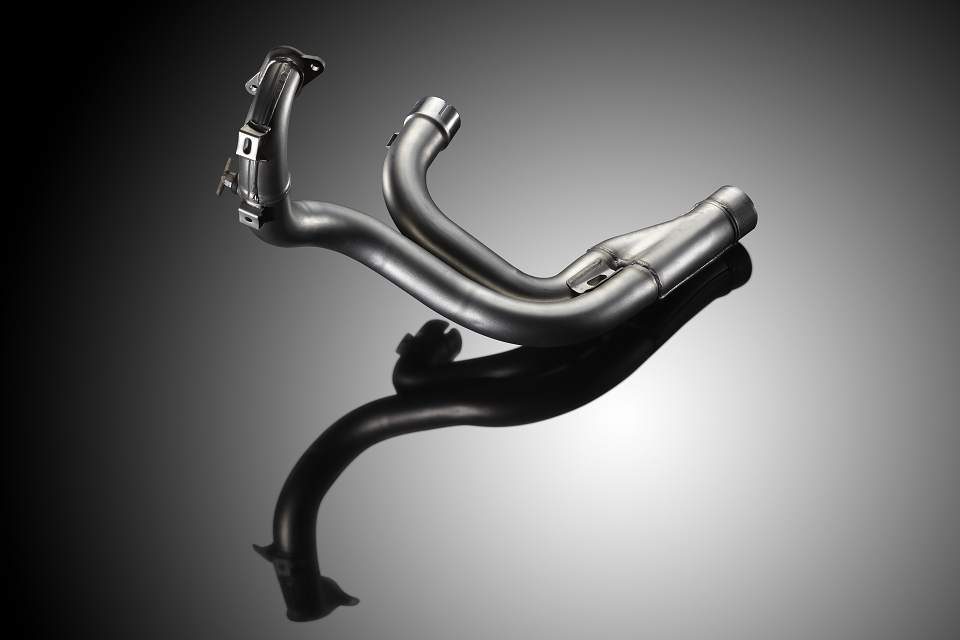
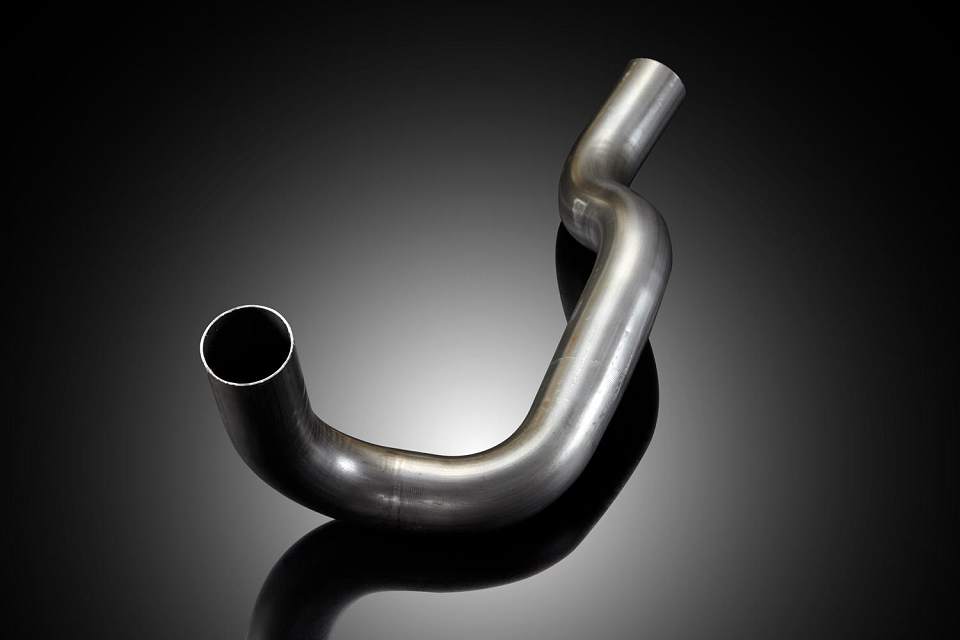
Bending an exhaust pipe is more complex than one might imagine. A single pipe often requires multiple bends while maintaining high precision and ensuring the integrity of the pipe wall. Specifically, the Wall Thinning Control must be kept below 15–20%. To achieve a balance between Wall Thinning Control and Power, a specialized exhaust pipe bender is essential to maintain smooth curves, durability, and overall quality.
This article explores the importance, key functions, and selection criteria for exhaust pipe benders, providing essential information for your procurement needs.
〈Extended Reading:Metal Tube and Bar Cutting Technologies: Evolution? Types? and Future Outlook?〉
Why Do You Need a Dedicated Exhaust Pipe Bender?
The exhaust pipe is an indispensable component of a vehicle's operation. It is responsible for efficiently guiding out combustion gases, reducing exhaust resistance, and directly affecting power output and fuel efficiency. Furthermore, through components like the muffler, it reduces noise.
If there is even a slight error in the structure or precision of the exhaust pipe, it can lead to turbulent airflow, increased noise, or decreased engine performance. The primary function of an exhaust pipe bender is to accurately master precision when bending special alloy materials, preventing phenomena such as wrinkling. This not only reduces raw material waste but also enhances production stability, ensuring every exhaust pipe meets high performance standards.
〈Extended Reading:What Is a Pipe BendingMachine? How to Choose the Right One for Your Needs!〉
Key Functions of an Exhaust Pipe Bender at a Glance
The core function of an exhaust pipe bender is to preserve structural integrity and ensure that every bend angle aligns perfectly with the design. Below are the primary functions:
〈Extended Reading:What Are the Types of Tube Bending Machines? Tube Bender's Applications vs Materials? Top Tube Bender Manufacturers Worldwide ?〉
Precision Control of Wall Thinning Rates
"Wall thinning" refers to the reduction in tube wall thickness during the bending process, a critical metric in automotive exhaust fabrication. By leveraging advanced Booster Technology (material thrust assistance), modern exhaust pipe benders can effectively minimize this thinning, ensuring structural consistency. This capability is essential for manufacturing high-performance exhaust systems and intake manifolds for the automotive and motorcycle industries
During bending, metal tubes naturally thin due to outer radius stretching. Maintaining a wall thinning rate below the industry-standard threshold of 15% to 20% is paramount for quality compliance. If thinning exceeds this range, immediate calibration of equipment parameters, tooling design, or booster carriage pressure is required to preserve structural integrity. Therefore, a high quality Booster Tube Bender is more than just a tool; it is a core piece of technology that dictates manufacturing precision and drives innovation in the automotive sector.
Multi-Stack Tooling for High-Efficiency Tube Bending
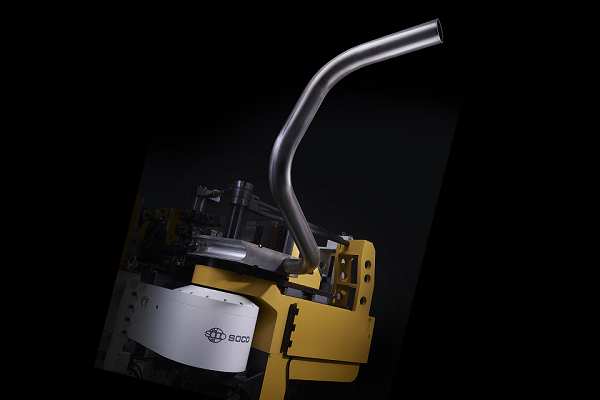
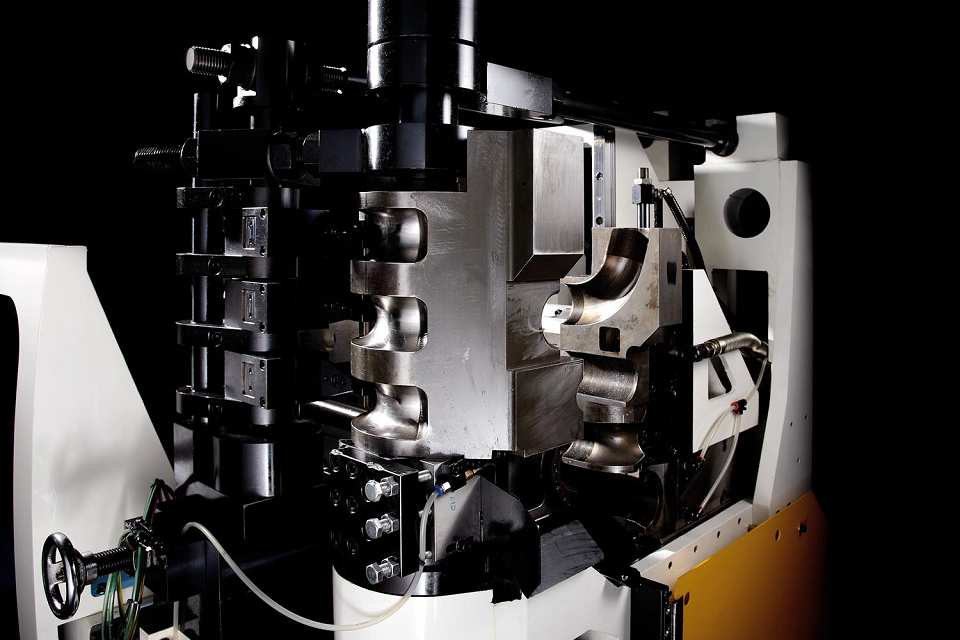
The implementation of multi-stack tooling in exhaust pipe benders is engineered to drastically enhance both production throughput and accuracy. A bender featuring a multi-stack design allows for the processing of various bend radii and complex geometries within a single, continuous setup—eliminating the need for frequent tool changes. Powered by high precision servo motors and advanced CNC systems, this technology significantly accelerates cycle times. It is the ideal solution for fabricating intricate piping systems across the automotive, marine, and industrial sectors, ensuring the rapid and stable delivery of premium bent components.
〈Extended Reading:Perfectly Synchronized Tube Bending and Forming Automation〉
Seamless Integration with End Forming Equipment
To achieve hermetic seals and precise connections with engines, mufflers, and catalytic converters, both ends of the exhaust pipe must undergo high-precision end forming. Modern exhaust pipe benders with automation capabilities enable a streamlined workflow by utilizing robotic transport mechanisms to transfer bent components directly to end-forming stations. This seamless integration optimizes the production line by reducing manual handling, minimizing the operational footprint, and significantly lowering labor costs while maximizing overall manufacturing throughput.
4 Factors for Choosing an Exhaust Pipe Bender to Boost Efficiency
The functionality and precision of an exhaust pipe bender directly impact production efficiency, product quality, and operational costs. Below are four key evaluation factors to serve as a guide for selecting the right equipment.
Powerful Thrust and Bending Precision
Precision is vital for automotive exhaust pipes to fit perfectly within the vehicle chassis. The bending path is more than just about fitment; it directly impacts exhaust backpressure and engine efficiency. Airflow resistance is shaped by the header design, pipe diameters, total length, and bend angles. While low back pressure can weaken low end torque, sharp or frequent bends create resistance that restricts high speed performance. This makes bend smoothness and diameter consistency critical. To balance optimal airflow with engine performance, manufacturers must rely on high-precision exhaust pipe benders and stable bending techniques.
Material and Pipe Diameter
When buying an exhaust pipe bender, always check the pipe diameter specifications. For projects involving very thin walls or small bending radius, anti-wrinkle equipment is essential to avoid damaging the raw material and compromising accuracy.
A prime example is the PT Series 1D Booster Tube Bender from SOCO. This high-speed, fully automatic machine specializes in wall thinning control, keeping it under 18% for pipes up to 130mm. It is perfectly suited for automotive exhaust systems and manifolds.
Evaluating Bending Complexity and Precision Requirements
The primary factor in selecting a pipe bender is the geometric complexity of your exhaust designs. For simple tube bending components with standard angles, manual or entry level machines may suffice. However, high performance exhaust pipe systems featuring multi-plane bends, small radius, or continuous complex curvatures demand a level of accuracy that traditional equipment cannot provide. In these cases, a CNC exhaust pipe bender is indispensable. By utilizing computerized control over every degree and radius, CNC pipe bender ensures high quality output and significantly reduce defect rates in even the most intricate production runs.
〈Extended Reading:5 Core Advantages of CNC Tube Benders, Your Complete Guide for Smart Equipment Selection!〉
Budget and Operation Mode
In addition to throughput requirements and material specifications, budget remains a decisive factor in tube bender evaluation. Manual tube benders are a cost-effective choice for small scale production with simple geometries, though they are labor intensive. Currently, the industry trend is moving toward automation, where exhaust pipe benders are integrated with end forming, punching, cutting, and robotic loading/unloading modules. Such integrated production lines maximize stability and output, resulting in optimized operational efficiency.
Exhaust Pipe Bender Checklist: A Complete Guide to Essential Features!
Now that you have a better understanding of these requirements, are you ready to select your exhaust pipe bender? Before finalizing your purchase, we recommend referring to the following "Exhaust Pipe Bender Checklist." This will help you verify if your selected model truly possesses the core technologies necessary for your production line.
Exhaust Pipe Bender Checklist
| Feature | Description |
|---|---|
| Precision Control | Digital or programmable controls for consistent angles. |
| Bending Arm/Tooling | Various sizes and angles that prevent deformation. |
| Clamping Device | Secures the pipe to prevent slipping or surface damage. |
| Adequate Power | Hydraulic or Servo control for different materials/thicknesses. |
| Multi-bend Capability | Completes multiple complex bends in one cycle. |
| Auto-loading | Automatic feeding to increase production speed. |
| Safety Devices | Emergency stops and protective covers for operator safety. |
SOCO: The Top Choice for Exhaust Pipe Benders! Patented DGT Technology Boosts Precision and Productivity
SOCO Machinery possesses innovative R&D technology and professional manufacturing facilities, establishing itself as a top-tier leader in the industry. SOCO pipe benders not only focus on rigorous quality control but also prioritize environmental sustainability, with a strong commitment to green design, energy efficiency, and carbon reduction.
To meet the processing demands for extremely small bending radius, SOCO’s "1D Booster Tube Bender" lineup features two major series of exhaust pipe benders: the SR and PT series benders. The SR series offers a bending capacity for large diameters ranging from 63.5mm to 168mm, while the PT series covers specifications under 130mm. Both series can be customized to increase bending diameters or be equipped with high precision electric servo or hydraulic systems based on specific requirements. These models integrate multiple exclusive technologies:
- 1D Booster & IB (Interference Booster): Beyond standard 1D boosting, our IB technology resolves the challenge of "dead zones" at short pipe ends where force is difficult to apply.
- Patented DGT (Direct Gear Transmission): This technology significantly enhances the precision of both roll bending and draw bending.
- DBS (Double Blades Shearing): This dual blade cutting technology minimizes "scrap ends" (material waste) typically seen in traditional processes, potentially achieving zero waste.
These innovations not only accelerate production cycles but also directly reduce material costs, making SOCO the high efficiency choice for balancing quality and profitability.
〈Recommended Model:1D Booster Tube Bender (SR + PT series)〉
〈Extended Reading:The Automotive Revolution: What Role Do Tube Benders Play?〉
Conclusion
In modern industrial production, the pursuit of lightweighting while meeting the demands for complex paths and specialized materials has become a dominant trend. Traditional, general purpose bending equipment often struggles to address production challenges such as wrinkling, ovality, and wall thinning control. However, through the advanced booster technology of a specialized exhaust pipe bender, wall thinning can be effectively managed to ensure flawless forming quality.
With over 40 years of experience in machinery production and R&D, SOCO Machinery provides cutting edge solutions, including laser tube cutting machines, CNC tube benders, and circular sawing machines. Our exclusive technologies are specifically engineered to solve these high-precision processing challenges. If you have any inquiries or specific requirements, please feel free to contact us. Let’s work together to enhance your market competitiveness.
〈Extended Reading:What is the Advantages of SOCO All-Electric Tube Benders?〉