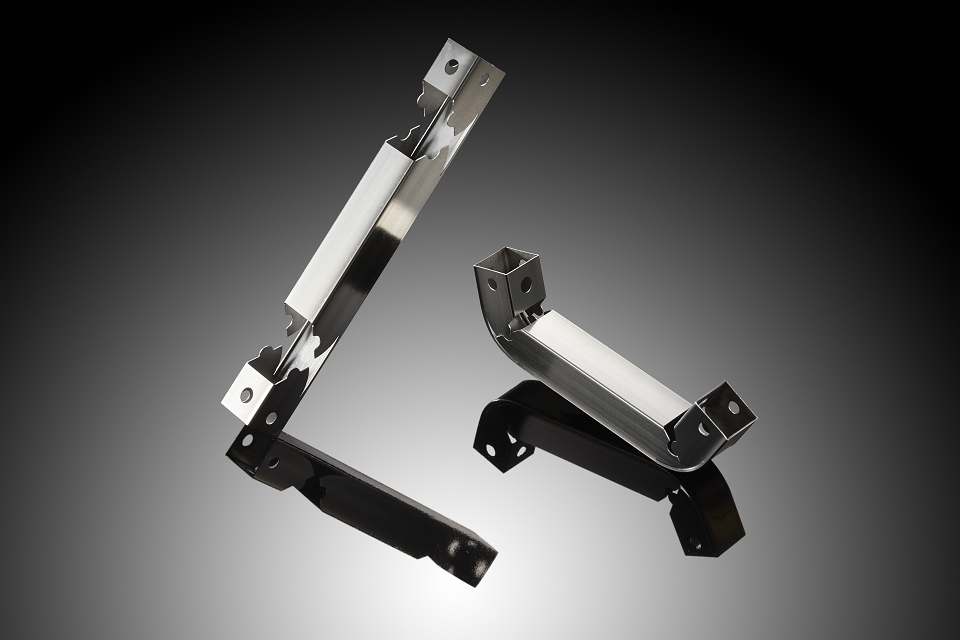
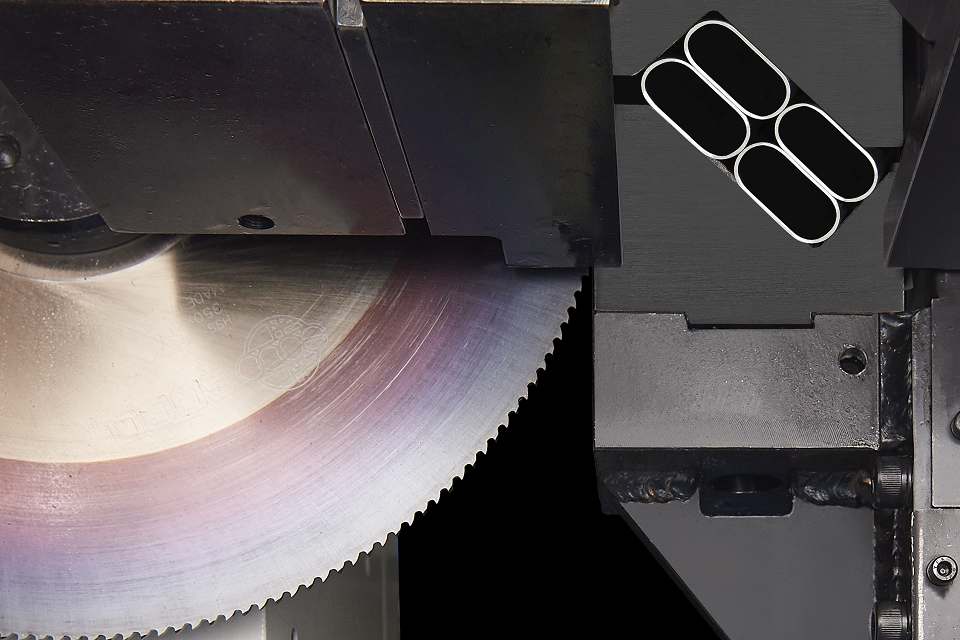
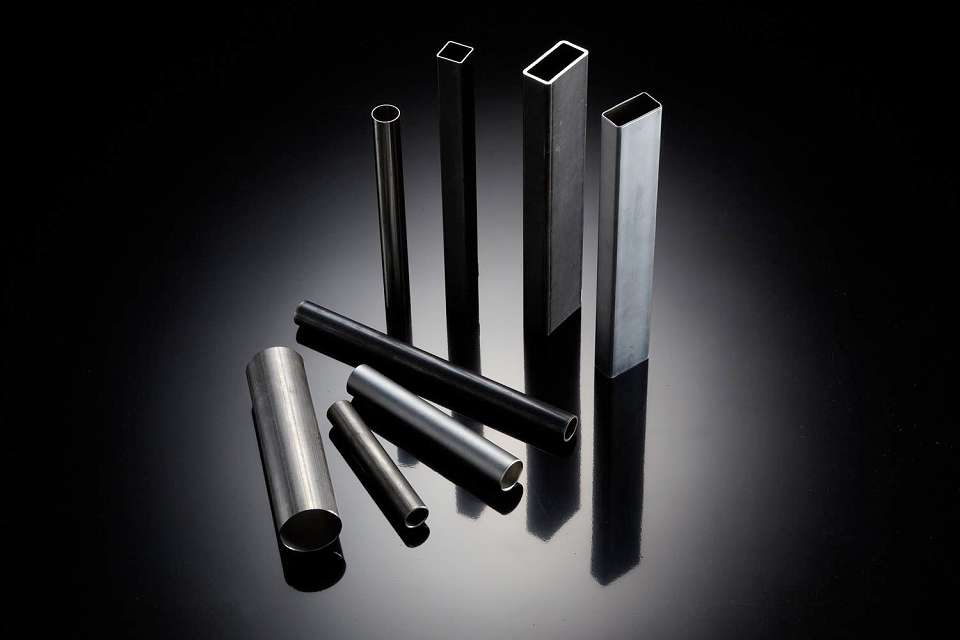
Schneidtechnologien für Metallrohre und -stäbe: Entwicklung? Typen? Und zukünftige Perspektiven? Branchenspezifisches Know-how 2025/08/27 Introduction and Core Value This report aims to provide procurement managers, engineers, and business leaders with an authoritative and comprehensive guide to navigating the highly competitive and diversified metal tube cutting machine market. By offering an in-depth analysis of the types, applications, advantages, disadvantages, and pricing of the major cutting technologies, we evaluate their value from the perspective of Total Cost of Ownership (TCO). This not only helps readers understand the technologies themselves but also uncovers the economic benefits and strategic significance behind them. Strategic Importance of Tube and Bar Processing in Modern Manufacturing Metal tubes and bars are a cornerstone of modern industry, with applications ranging from structural supports in construction, exhaust systems and frames in automotive manufacturing, lightweight frames and fluid pipelines in aerospace, to precision instruments in the medical sector. Among all processing methods, cutting quality—particularly accuracy and edge smoothness— directly impacts downstream processes such as assembly and welding, ultimately determining the performance, durability, and safety of the final product. Choosing the right metal tube cutting machine is therefore not merely a production decision, but a strategic choice that directly affects a company’s competitive edge. Evolution of Metal Tube Cutting Technologies The development of tube cutting has evolved from energy-intensive, low-precision, labor-dependent processes to methods emphasizing efficiency, automation, and precision. Broadly, these technologies can be divided into two categories: Traditional Cold Saws for Tubes and Bars Laser Cutting for Tubes and Bars Traditional Cold Saw (for Tubes and Bars) Several decades ago, traditional cutting relied on manual tools or simple mechanical saws. These methods were inefficient, produced rough cuts with heavy burrs, and generated significant noise, dust, and thermal deformation. While still in use in some industries today, rising demand for efficiency and quality has driven the adoption of semi-automatic and fully automated tube cutting machines. However, traditional equipment struggles with complex cutting requirements such as angled cuts, perforations, and notching. These often require multiple steps—such as cutting followed by drilling, milling, or pressing—resulting in longer processing times and higher costs. Laser Cutting for Tubes and Bars Against this backdrop, laser cutting technology emerged as a revolutionary breakthrough in tube and bar processing. It is important to note that the widespread adoption of laser cutting is driven not only by technological maturity, but also by market forces. Early laser cutting systems were mainly used for sheet metal. However, as competition intensified and profit margins thinned, equipment manufacturers sought new opportunities—laser tube cutting quickly became one of the most promising applications. The advantage of a laser tube cutting machine lies in its ability to consolidate multiple traditional processes—such as sawing, drilling, milling, and engraving—into a single automated platform. It can perform straight cuts, angled cuts, perforations, and slots with smooth, burr-free edges and an extremely small heat-affected zone (HAZ), significantly reducing the need for post-processing such as grinding and deburring. Although the initial investment cost of a laser tube cutting machine is relatively high, its ability to dramatically improve overall production efficiency and reduce TCO makes it a highly competitive solution. As a result, laser tube cutting has become a key force in manufacturing transformation, driven by both technological innovation and market demand. Core Classifications and Working Principles of Metal Tube Cutting Machines To build a clear and logical analytical framework, this section classifies metal tube cutting machines according to their cutting principles, supplemented by the degree of automation, so that readers can easily understand and compare the characteristics of each technology. 1. Mechanical Cutting: Sawing and Cold Cutting (1) Cold Saws for Tubes and Bars Working Principle: Cold saws use a high-speed rotating circular blade, typically combined with cooling methods such as cutting fluid or oil mist, to reduce tool wear. They are known for their high cutting precision and smooth finishes, making them ideal for applications requiring accuracy. Applications & Features: Suitable for cutting both tubes and solid bars, with high cutting speed, though the cutting diameter range is smaller than that of band saws. Equipment ranges from portable saws to fully automated cutting lines with feeding and unloading systems. Widely used in automotive parts, aerospace, machinery manufacturing, construction, and heavy industries. Renowned manufacturers include BLM, SOCO, Bewo, among others. (2) Band Saws Working Principle: Band saws employ a continuous loop of saw blade running at a constant speed to cut through materials, enabling long-duration and stable operations. They are particularly suitable for large-diameter or heavy-section metals. Applications & Features: Can cut large bars exceeding 160 mm in diameter, beyond the capacity of most cold saws. Cutting speed is slower, but their ability to handle oversized materials makes them essential in steel processing and heavy industry. 2. Thermal Cutting Technologies: Harnessing High Temperatures (1) Flame Cutting Machines Working Principle: Flame cutting utilizes a mixture of oxygen and a combustible gas (e.g., acetylene) to generate a high-temperature flame. Once the metal reaches ignition temperature, a high-pressure oxygen jet blows away the molten metal to form the cut. Applications & Features: Advantages: Low equipment cost; capable of cutting extremely thick sections (up to 2 meters). Applications: Primarily used in heavy industry for cutting large seamless steel pipes and thick structural components. Limitations: Low precision, rough cut surfaces, significant heat deformation, and heavy oxidation/slag formation, which requires substantial post-processing. With the advancement of alternative technologies, flame cutting is now limited mainly to ultra-thick materials. (2) Plasma Cutting Machines Working Principle: Plasma cutting ionizes gases such as argon, nitrogen, or hydrogen using an electric arc, creating a high-temperature plasma jet. The jet melts the metal instantly, while a high-speed gas flow blows away the molten material. Applications & Features: High Speed: Cuts thin carbon steel up to 5–6 times faster than flame cutting. Cutting Quality: Produces smoother surfaces with less thermal deformation; effective for conductive metals under 100 mm thick (stainless steel, carbon steel, aluminum, copper, etc.). Industries: Widely used in shipbuilding, construction machinery, pressure vessels, automotive and motorcycle manufacturing. Although superior to flame cutting, plasma cutting lags behind fiber laser cutting in terms of precision, kerf width, and overall quality. (3) Fiber Laser Tube Cutting Machines Working Principle: Fiber laser machines generate a high-energy laser beam transmitted through optical fibers. The beam is focused on the tube surface, instantly melting and vaporizing the metal. Assist gases such as nitrogen or oxygen blow away the molten material, while a CNC system precisely controls the cutting path. Applications & Features: Ultra-high precision (up to ±0.05 mm), minimal heat-affected zone (HAZ), smooth and burr-free edges. Capable of complex operations including perforations, bevel cuts, and slots. Extensively applied in automotive, aerospace, electronics, kitchenware, and advertising/decoration industries. Market advancements include automation upgrades such as auto-loading/unloading systems, tail material reduction designs, and hybrid machines that can cut both sheet metal and tubes. Leading global brands include TRUMPF (Europe), SOCO (Asia), and HAN’S LASER (China). Future Outlook of Metal Tube and Bar Cutting Technologies As global manufacturing moves toward smart factories and sustainable production, the development of metal tube cutting machines is expected to follow three major trends: 1. Smart Manufacturing and Industry 4.0 Integration Future tube cutting machines will no longer function as isolated standalone equipment. Instead, they will evolve into intelligent manufacturing units seamlessly integrated with IoT (Internet of Things) and big data analytics. Remote monitoring & predictive maintenance: Identifying potential failures before they occur, reducing downtime. Process optimization: Real-time adjustment of cutting parameters to maintain consistent quality. Smart scheduling: Automatically adjusting production schedules based on capacity and order requirements, improving overall line efficiency. This transformation will significantly enhance the automation level, productivity, and reliability of entire factories. 2. Multi-Functional and Modular Design To simplify workflows and lower production costs, multi-functional and modular equipment will become the new standard. Integration of tapping, welding, and chamfering alongside cutting. Modular upgrades that allow flexible expansion according to production needs. This means that a single machine can achieve one-stop processing—from raw tubes to finished parts—reducing handling, intermediate storage, and cycle times, while boosting efficiency and flexibility. 3. Environmental Sustainability and Energy Efficiency With global emphasis on carbon neutrality and green manufacturing, tube cutting machines will place greater focus on energy savings and environmental protection. High-efficiency motors and smart energy control systems to minimize power consumption. Optimized cutting processes that reduce material waste. Advanced dust and fume extraction systems to protect operators’ health and meet environmental regulations.